

How to Trade Forex Pair Niches(JPY pairs, Exotics)
Learn how to trade forex pair niches including JPY pairs and exotic forex pairs. Understand volatility, spreads, liquidity, and risk before you trade.

Forex pair niches refer to distinct categories of currency pairs that share specific behavioural traits. Each niche has different volatility profiles, liquidity conditions, and spread characteristics.
This guide covers two of the most traded niches beyond the standard majors: JPY pairs and exotic forex pairs. You will learn how each behaves, when they move, what risks they carry, and how to adjust your approach when trading them.
This is not about which pairs are “better.” It is about understanding what you are dealing with before you place a trade.
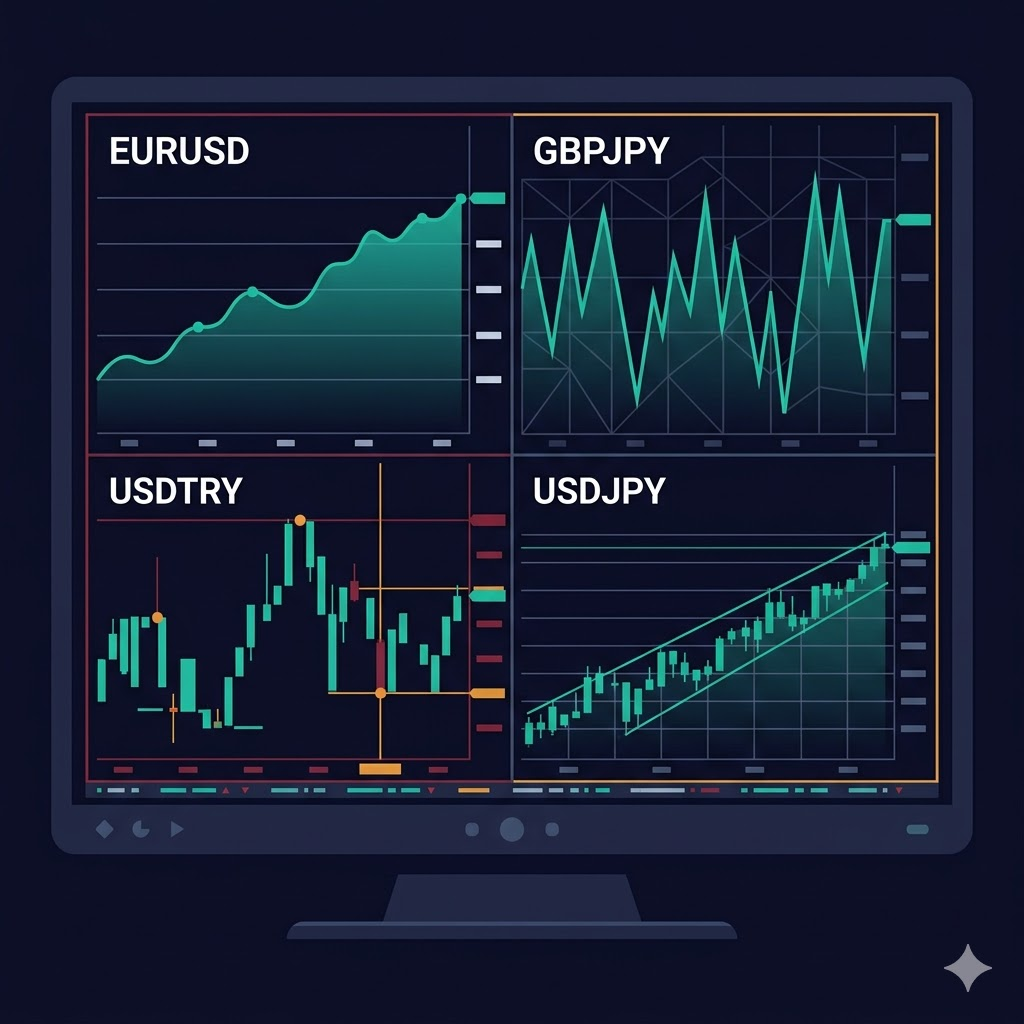
Quick Summary Table
| Pair Type | Example Pairs | Key Characteristics | Risk Level | Why Traders Choose Them |
| Major Pairs | EURUSD, GBPUSD | Tight spreads, high liquidity, predictable structure | Low–Medium | Lowest cost per trade. Best technical structure. Suitable as a foundation for most strategies |
| JPY Major | USDJPY | High liquidity, session-sensitive volatility | Medium–High | Tight spreads with a wider intraday range than EURUSD. Reacts cleanly to US data and BoJ policy |
| JPY Crosses | GBPJPY, EURJPY, AUDJPY | Amplified moves, wide intraday range | High | Larger pip ranges per setup. Strong technical respect during active sessions |
| Exotic Pairs | USDTRY, USDZAR, USDMXN | Low liquidity, wide spreads, irregular moves | Very High | Carry trade returns. Larger directional trends. Lower correlation with major pairs |
Table of Contents
- What Are Forex Pair Niches?
- Why Forex Pair Characteristics Matter
- Trading JPY Pairs
- Trading Exotic Forex Pairs
- Key Differences Between JPY Pairs and Exotics
- Common Mistakes When Trading Forex Pair Niches
- How This Applies to Prop Trading
- Key Takeaways
- FAQ
What Are “Forex Pair Niches”?
Not all currency pairs behave the same way. Forex pair niches are groupings based on shared market behaviour, not just geographic origin.
There are three broad categories:
- Majors — pairs involving the US Dollar against high-liquidity currencies (EURUSD, GBPUSD, USDCHF). Tight spreads. Predictable structure. High trading volume.
- JPY pairs — pairs involving the Japanese Yen. This includes both JPY majors (USDJPY) and JPY crosses (GBPJPY, EURJPY, AUDJPY). Known for volatility spikes and session sensitivity.
- Exotic pairs — pairs involving one major currency and one from a smaller or emerging economy. Examples: USDTRY (Turkish Lira), USDZAR (South African Rand), USDMXN (Mexican Peso). Low liquidity. High spreads. Irregular price action.
Understanding which niche a pair belongs to determines how you size positions, set stops, and read price behaviour.
Why Forex Pair Characteristics Matter
Forex pair characteristics directly affect execution quality, trade management, and risk exposure.
Volatility
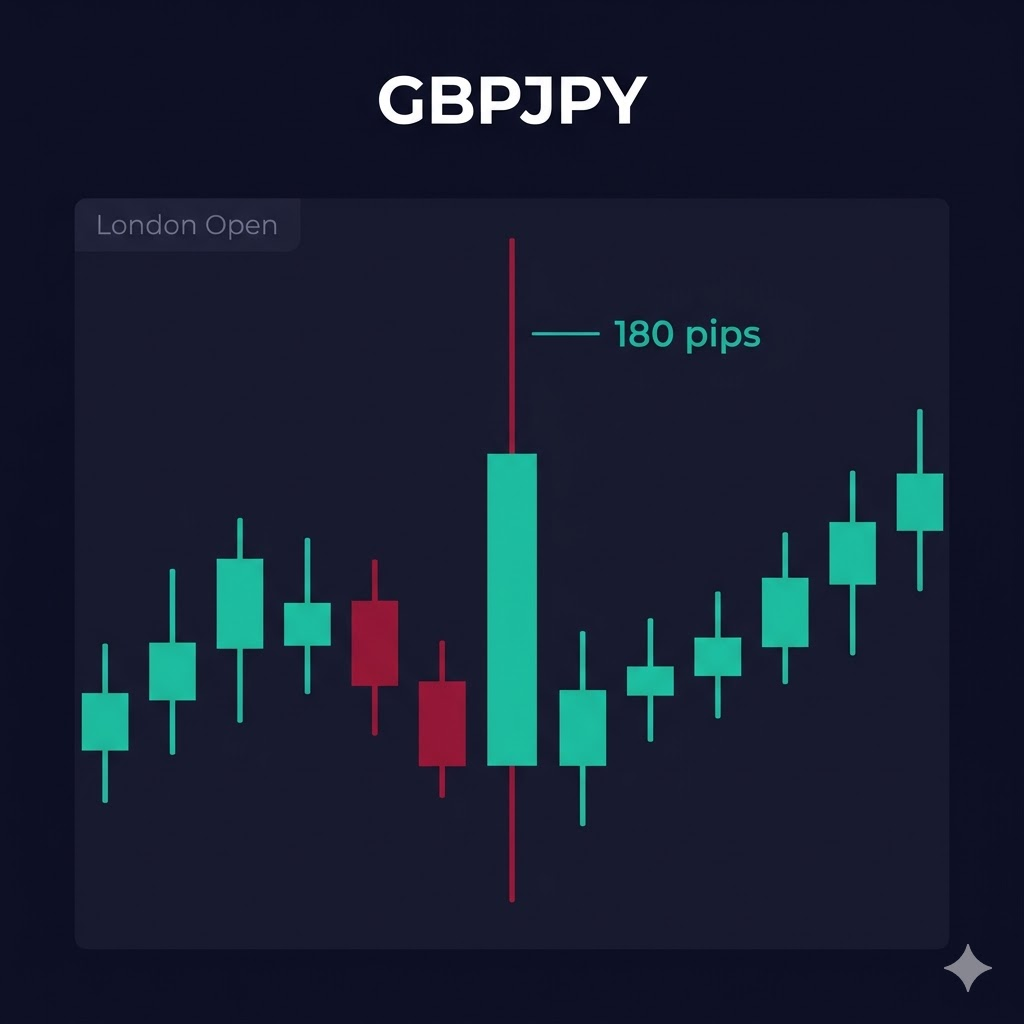
Different pairs move differently. GBPJPY can move 150–200 pips in a single London session. EURUSD might move 60–80 pips in a single day. Volatility determines stop distance requirements and directly affects your risk-per-trade calculation.
Liquidity
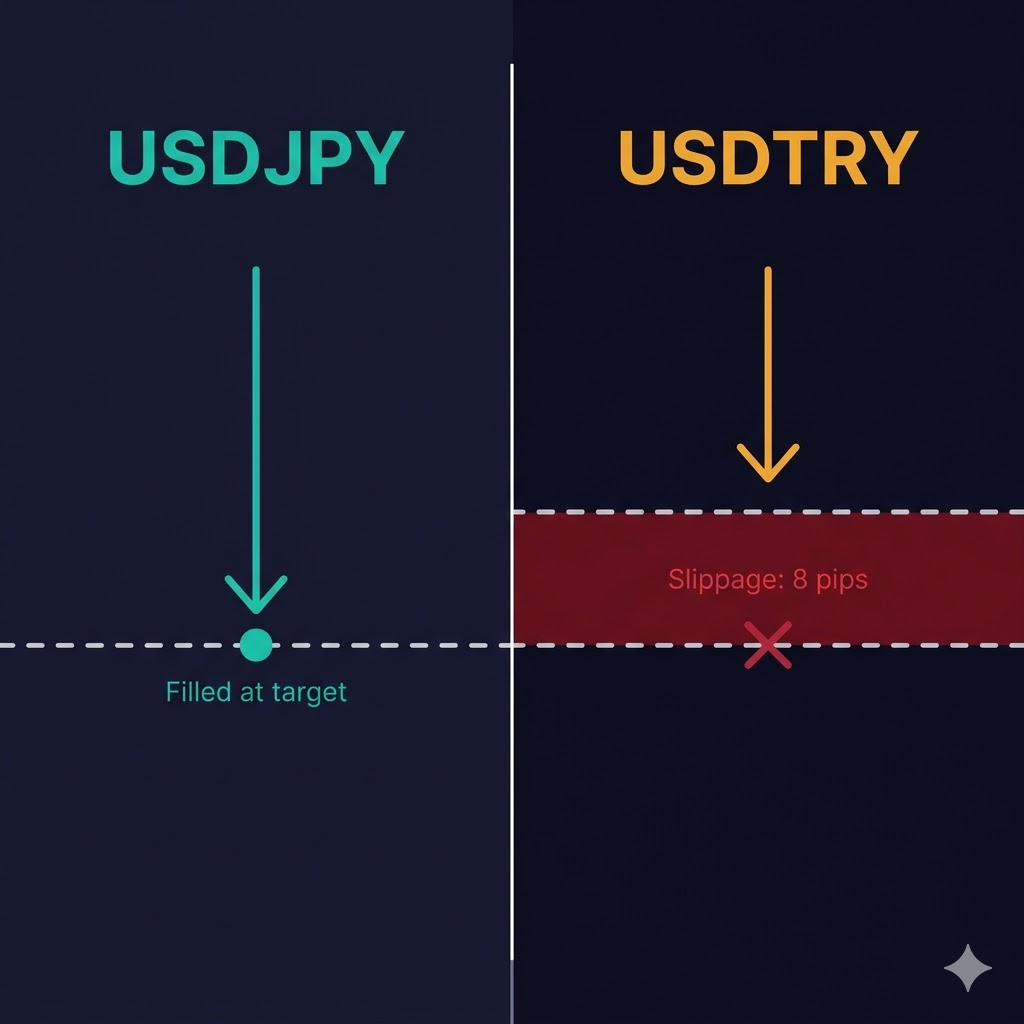
Liquidity controls how easily your order fills at the price you want. Major pairs have deep liquidity pools. Exotic pairs do not. Low liquidity means orders can slip — your fill price may differ significantly from your intended entry.
Spread Impact
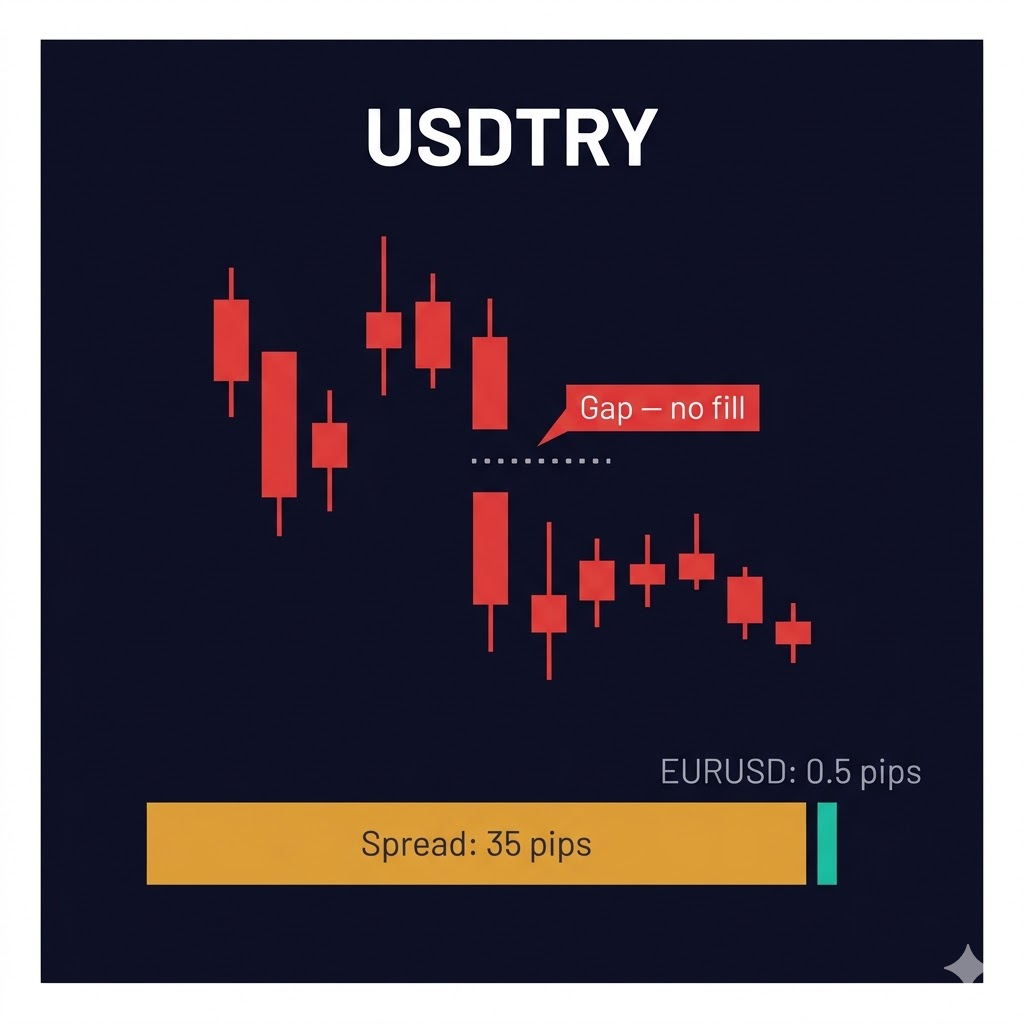
Spreads are wider on less liquid pairs. A 50-pip spread on USDTRY is proportionally far more costly than a 0.5-pip spread on EURUSD. Every trade you take on an exotic pair starts deep in the negative before the price has moved at all.
Execution Differences
JPY pairs execute cleanly during peak sessions. Exotic pairs can show erratic fills during low-volume windows. This is not a broker issue — it reflects the underlying market structure of each pair.
Trading JPY Pairs
JPY pairs trading requires understanding when these pairs are most active and why they move the way they do.
Key JPY Pair Examples
- USDJPY — The most liquid JPY pair. Closely tied to US Treasury yields and Bank of Japan policy.
- GBPJPY — One of the highest-range pairs in the forex market. Combines GBP volatility with JPY sensitivity.
- EURJPY — Broadly tracks global risk sentiment. Moves with equity markets.
- AUDJPY — A recognised risk barometer. Falls when global risk appetite drops.
How JPY Pairs Behave
JPY pairs are session-sensitive. They respond most strongly during:
- The Asian session (Tokyo open, 00:00–09:00 GMT) — USDJPY and AUDJPY see early directional moves.
- The London–Tokyo overlap (07:00–09:00 GMT) — This window generates the largest volatility spikes across all JPY crosses.
- US session — USDJPY reacts to US economic data and Federal Reserve communication.
Volatility spikes on JPY pairs are often sharp and fast. A risk-off event — such as geopolitical tension or a surprise central bank statement — can move GBPJPY 200+ pips within minutes.
How Traders Approach JPY Pairs
Traders using JPY pairs typically:
- Widen stops to account for intraday range — tight stops get taken out by normal volatility.
- Trade with the session — entering during high-activity windows improves fill quality.
- Track Bank of Japan policy — BoJ (Bank of Japan) intervention risk is real and has caused 300–400 pip moves historically.
- Avoid holding GBPJPY or EURJPY through major news events without accounting for potential range expansion.
Trading Exotic Forex Pairs
Exotic forex pairs offer high potential movement, but that movement comes with specific structural risks that most traders underestimate.
Key Exotic Pair Examples
- USDTRY (US Dollar / Turkish Lira) — Extremely high volatility. Subject to political and central bank unpredictability.
- USDZAR (US Dollar / South African Rand) — Commodity-linked. Sensitive to gold prices and emerging market sentiment.
- USDMXN (US Dollar / Mexican Peso) — One of the more liquid exotics. Still carries wider spreads than majors.
- USDBRL (US Dollar / Brazilian Real) — Low liquidity. Significant spread costs.
Key Characteristics of Exotic Pairs
Wider spreads. Exotic pairs routinely carry spreads of 10–50 pips, depending on the broker and session. This directly reduces profitability on short-term trades.
Lower liquidity. Order books are thinner. Large orders move price. Slippage is common, particularly outside peak trading hours.
Irregular price action. Exotic pairs do not always respect technical levels the way major pairs do. Central bank interventions, political announcements, and capital controls can override chart structure instantly.
Carry trade influence. A carry trade is a strategy where you borrow a low-interest currency to buy a high-interest currency. The trader earns the difference in interest rates as long as the position is held and the exchange rate stays stable. Many exotic pairs are held as carry trades because emerging-market currencies often carry high interest rates. When carry positions build up, they can drive extended trends in one direction. When the macro environment shifts and traders unwind those positions at the same time, the resulting reversals are sharp and fast.
Risks and Trade-Offs
| Risk | Description |
| Spread cost | Eats into profit margins on every trade |
| Slippage | Fills may differ significantly from the intended price |
| Political risk | Government or central bank action can gap the price |
| Low-volume windows | Liquidity disappears outside key market hours |
When Traders Use Exotic Pairs
Exotic pairs suit traders who:
- Understand carry trade mechanics (the strategy of holding a currency for its interest rate advantage) and hold positions over longer timeframes.
- Have specific knowledge of the underlying economy driving the pair.
- Can absorb higher spread costs within a profitable overall strategy.
Exotic pairs are not suitable as a starting point. They are niche instruments for traders who have already proven consistency on liquid pairs.
Key Differences Between JPY Pairs and Exotics
| Factor | JPY Pairs | Exotic Pairs |
| Liquidity | High (USDJPY) to Medium (crosses) | Low |
| Spread | 0.5–3 pips typically | 10–50+ pips |
| Volatility | High, but structured around sessions | High and irregular |
| Execution quality | Reliable during active sessions | Variable, slippage risk |
| Predictability | Session-driven, technically responsive | Lower — subject to external shocks |
| Risk level | Medium–High | Very High |
| Learning curve | Manageable with experience | Steep — requires specialist knowledge |
JPY pairs move a lot, but their behaviour follows identifiable patterns tied to sessions and macroeconomic data. You can plan around them.
Exotic pairs move a lot too, but the moves come from different drivers — political shifts, central bank decisions, capital flows. The trade-off is wider spreads and lower predictability in exchange for larger trends and carry returns. They suit traders who can read the underlying economy and absorb the higher costs.
Why Traders Choose JPY Pairs
JPY pairs offer specific advantages that draw both new and experienced traders:
- Predictable session-based volatility. Unlike pairs that move randomly throughout the day, JPY pairs concentrate their largest moves around the Tokyo open and the London–Tokyo overlap. You can plan your trading day around these windows.
- Wider intraday range than majors. GBPJPY and EURJPY produce 100–200 pip ranges on average days, compared to 60–100 pips for EURUSD. Wider ranges mean more opportunity per setup if your strategy can capture trend moves.
- Strong technical respect. JPY pairs respond well to support, resistance, and trend structure. Chart patterns work reliably during active sessions.
- Tight spreads on USDJPY. USDJPY is one of the most liquid pairs in the market. Spreads are competitive with EURUSD on most brokers.
- Macro clarity. JPY moves are driven by identifiable factors — Bank of Japan policy, US bond yields, and global risk sentiment. The drivers are public, scheduled, and trackable.
JPY pairs suit traders who want larger ranges than the majors offer but still need clear technical structure and predictable timing. The volatility is a feature, not a flaw — if you size positions correctly and trade the right session.
Why Traders Choose Exotic Pairs
Exotic pairs carry real risks, but they exist because they offer specific advantages that majors and JPY pairs do not:
- Interest rate differentials. Carry trades on exotics like USDTRY, USDZAR, and USDMXN can produce significant returns from the interest rate gap alone, separate from price movement. Holding a high-interest currency against a low-interest currency earns a daily yield. For traders with a long-term horizon, the carry can compound meaningfully over time.
- Larger directional moves. Emerging-market currencies trend harder and longer than majors. A USDZAR or USDMXN trend driven by commodity prices or political shifts can run for weeks. Traders who catch the move early capture significantly more than they would on EURUSD over the same period.
- Lower correlation with major pairs. Exotic pairs do not always move with the rest of the forex market. This makes them useful for portfolio diversification — a position on USDMXN may behave independently of your EUR or GBP exposure.
- Less crowded trades. Major pairs and JPY crosses have heavy retail and institutional participation. Exotic pairs see fewer participants, which can produce cleaner trends and clearer technical setups when the conditions are right.
- Macro and regional opportunity. Traders with specific knowledge of an emerging economy — political cycles, commodity exports, regional central bank policy — can develop edges that are not available on majors.
Exotic pairs suit traders who can absorb wider spreads, manage carry costs, and apply specialist knowledge of the underlying economy. The risk profile is higher than majors or JPY pairs, but the potential rewards are also different in character. For the right trader with the right strategy, exotics offer opportunities that the majors cannot.
Common Mistakes When Trading Forex Pair Niches
1. Overexposure to Volatility
Traders move into GBPJPY or USDTRY to chase larger pip moves. They use the same position size as they would on EURUSD. The result is disproportionate risk exposure. Wider-ranging pairs require smaller position sizes — not the same size applied to a faster-moving instrument.
2. Ignoring Spread Costs
A 20-pip spread on an exotic pair means the price must move 20 pips in your favour before you reach break-even. Most traders do not factor this into their target calculations. Any strategy with a 1:1 risk-reward ratio fails immediately on high-spread exotics.
3. Trading Exotics Like Majors
Technical analysis on exotic pairs functions differently. Support and resistance levels are less reliable. News events can override structure with no warning. Applying a major-pair trading framework to an exotic produces inconsistent results.
4. Ignoring Session Timing on JPY Pairs
USDJPY during the New York afternoon session is not the same instrument as USDJPY during the London–Tokyo overlap. Volume, spread, and volatility all differ. Trading the wrong session for a specific JPY pair significantly reduces the edge.
5. Underestimating Rollover Costs on Exotics
Some exotic pairs carry significant overnight swap costs due to interest rate differentials. Holding positions on USDTRY or USDZAR overnight can generate swap charges that erode profitability over time.
How This Applies to Prop Trading
In a structured prop trading environment, pair selection is a risk management decision — not just a preference.
Position Sizing
Higher-volatility pairs require adjusted position sizing. A trader using 1% risk on EURUSD should not apply the same percentage in GBPJPY without accounting for the wider stop distance required. The risk percentage stays constant — the lot size adjusts down.
Drawdown Control
Exotic pairs increase the probability of unexpected drawdown events. Political announcements, central bank interventions, and liquidity gaps can generate losses that are disproportionate to normal market conditions.
Consistency Requirements
Prop trading evaluation programs assess consistency. Large swings caused by exotic-pair volatility or poor position sizing on JPY crosses directly threaten that record of consistency. A single oversized GBPJPY loss can offset multiple weeks of controlled performance.
FXIFY’s funding programs are designed for traders who demonstrate structured risk management. Pair selection is part of that structure. Traders who understand forex pair characteristics — and trade within those characteristics — build more sustainable performance records from their starting capital through to a performance split.
The choice of pair is not neutral. It is a risky decision.
Key Takeaways
- Forex pair niches are defined by volatility, liquidity, spread, and execution behaviour — not geography alone.
- JPY pairs are high-volatility instruments best traded during specific session windows, particularly the London–Tokyo overlap.
- GBPJPY is one of the widest-ranging pairs in the market. It requires wider stops and smaller position sizes.
- Exotic forex pairs carry very wide spreads, lower liquidity, and irregular price action driven by political and macroeconomic factors.
- Spread costs on exotic pairs must be factored into every target and risk calculation.
- Applying the same position size across different pair niches is a risk management error.
- JPY pairs follow identifiable session-based patterns. Exotic pairs do not follow a predictable technical structure reliably.
- In prop trading contexts, pair selection directly affects consistency, drawdown risk, and long-term performance.
- Exotic pairs are not suitable for traders still building a performance track record.
- Understanding forex pair characteristics before trading a new niche is not optional — it is part of sound risk management.
FAQ
Are JPY pairs more volatile than major pairs?
JPY crosses consistently produce larger intraday ranges than standard major pairs like EURUSD or USDCHF. GBPJPY can move 150–250 pips on an active day. EURUSD typically moves 60–100 pips under similar conditions. USDJPY itself is more moderate but still responds sharply to Bank of Japan policy shifts and US data releases.
Why are exotic forex pairs considered high risk?
Exotic forex pairs carry three compounding risks that major pairs do not. Wider spreads increase the cost of every trade. Lower liquidity increases slippage — your fill price may differ from your intended entry. Political and central bank events in emerging markets can gap price without warning, bypassing stop-loss orders entirely.
Despite these risks, traders still trade exotics for specific reasons. Carry trade returns from interest rate differentials can produce a yield independent of price movement. Larger directional trends than majors offer. Lower correlation with the rest of the forex market makes exotics useful for diversification. The appeal is real for traders who can manage the risks.
What is the best time to trade JPY pairs?
The most active windows for JPY pairs trading are the Asian session (00:00–09:00 GMT) and the London–Tokyo overlap (07:00–09:00 GMT). The overlap window concentrates volume from both Japanese and European participants, which produces sharper directional moves than either session in isolation. USDJPY also moves significantly during the US session when American economic data is released. Trading JPY pairs during low-volume windows — such as the New York afternoon — produces less reliable price action.
Can you trade exotic pairs in a prop firm evaluation?
This depends on the specific evaluation program rules. Most prop firms, including FXIFY, do not restrict pair selection. However, exotic pairs require specific risk management on a funded account. Wide spreads eat into per-trade profitability. Slippage during volatile periods can produce drawdown that is hard to recover from inside an evaluation window. Most funded traders who use exotics treat them as one part of a broader strategy rather than the primary instrument during evaluation.
How do I adjust position sizing for JPY pairs?
Calculate your stop loss in pips first. JPY pairs require wider stops than major pairs to avoid being stopped out by normal volatility. Your risk percentage stays fixed — but the actual lot size must be reduced to reflect the wider stop. A 50-pip stop on EURUSD and a 120-pip stop on GBPJPY at the same 1% risk level require very different lot sizes.
What causes sudden moves in JPY pairs?
Several factors drive sharp moves in JPY pairs. Bank of Japan policy decisions — particularly unexpected changes to interest rate guidance or bond market policy — cause large immediate moves. Risk-off events such as geopolitical instability or equity market sell-offs push capital into the Yen as a safe-haven currency, driving JPY pairs down sharply. US economic data moves USDJPY directly through changes in yields and rate expectations.
Is USDMXN a good alternative to other exotic pairs for beginners?
USDMXN is one of the more liquid exotic pairs due to the size of the Mexican economy and its trade relationship with the United States. Spreads are narrower than pairs like USDTRY or USDBRL. However, it is still exotic. It carries higher spread costs than any major pair, reacts sharply to US trade policy news, and should not be treated as equivalent to a major pair. It is a less extreme starting point within the exotic category — not a substitute for learning majors first.