

How to Trade Trendlines: Guide for Beginners
This guide breaks down what trendlines are, how breakouts work, and the patterns they form, so you can apply them confidently in your trading.
Trendlines are one of the most widely used tools in technical analysis because they provide a way to understand market direction. By showing whether price is consistently moving higher or lower, they help traders quickly identify the prevailing trend, spot potential turning points, and judge when momentum may be changing. A single well-drawn line can reveal whether buyers or sellers currently dominate the market.
What is a trendline?
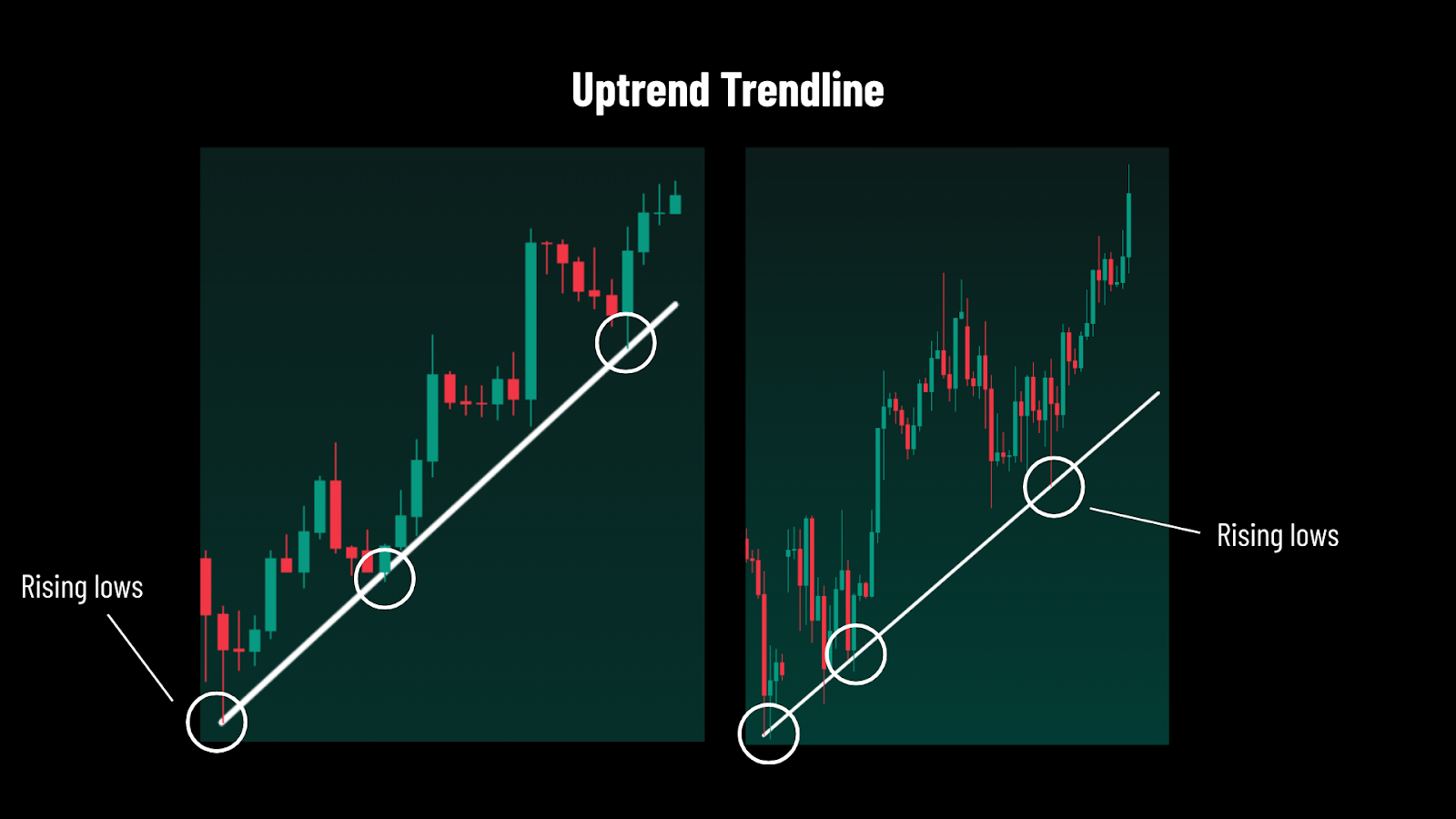
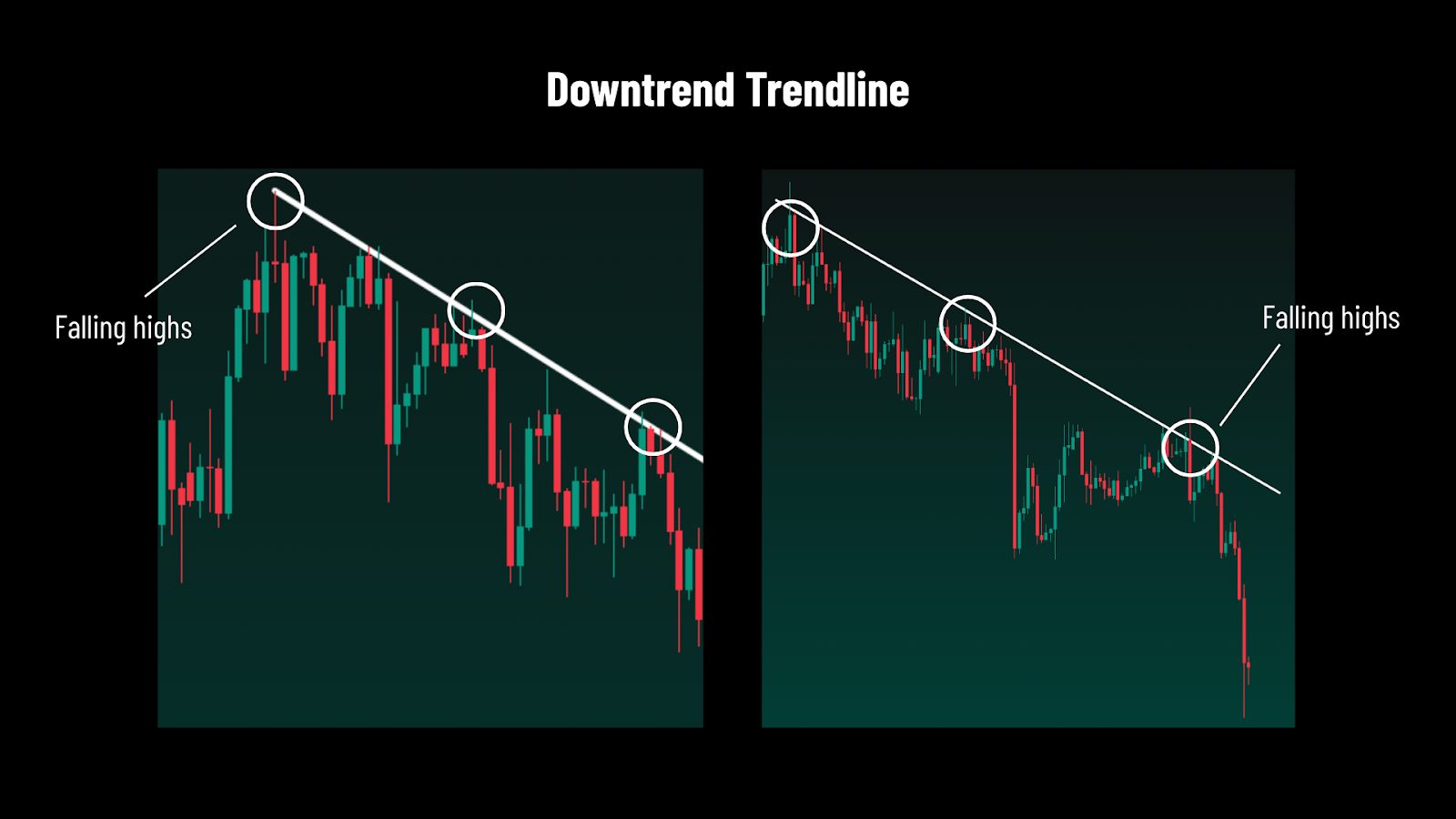
Trend lines are more than just a line on a price chart—it’s a way to simplify the market’s story. By connecting swing highs in a downtrend or swing lows in an uptrend, traders can see the path that price is following. It turns a noisy chart into a clear guide that shows who has control of the market, and where unseen support and resistance levels may lie.
Uptrend line/Support: Connects rising lows, signalling that buyers are steadily pushing prices higher.
Downtrend line/Resistance: Connects falling highs, signalling that sellers are keeping pressure on the market.
The purpose of drawing a trendline isn’t only to mark past price moves—it also helps traders monitor whether momentum is holding or if a potential shift is developing. If price respects the line, momentum remains intact. If it breaks, it may be hinting at a change in direction to watch closely.
Trendline Breakouts
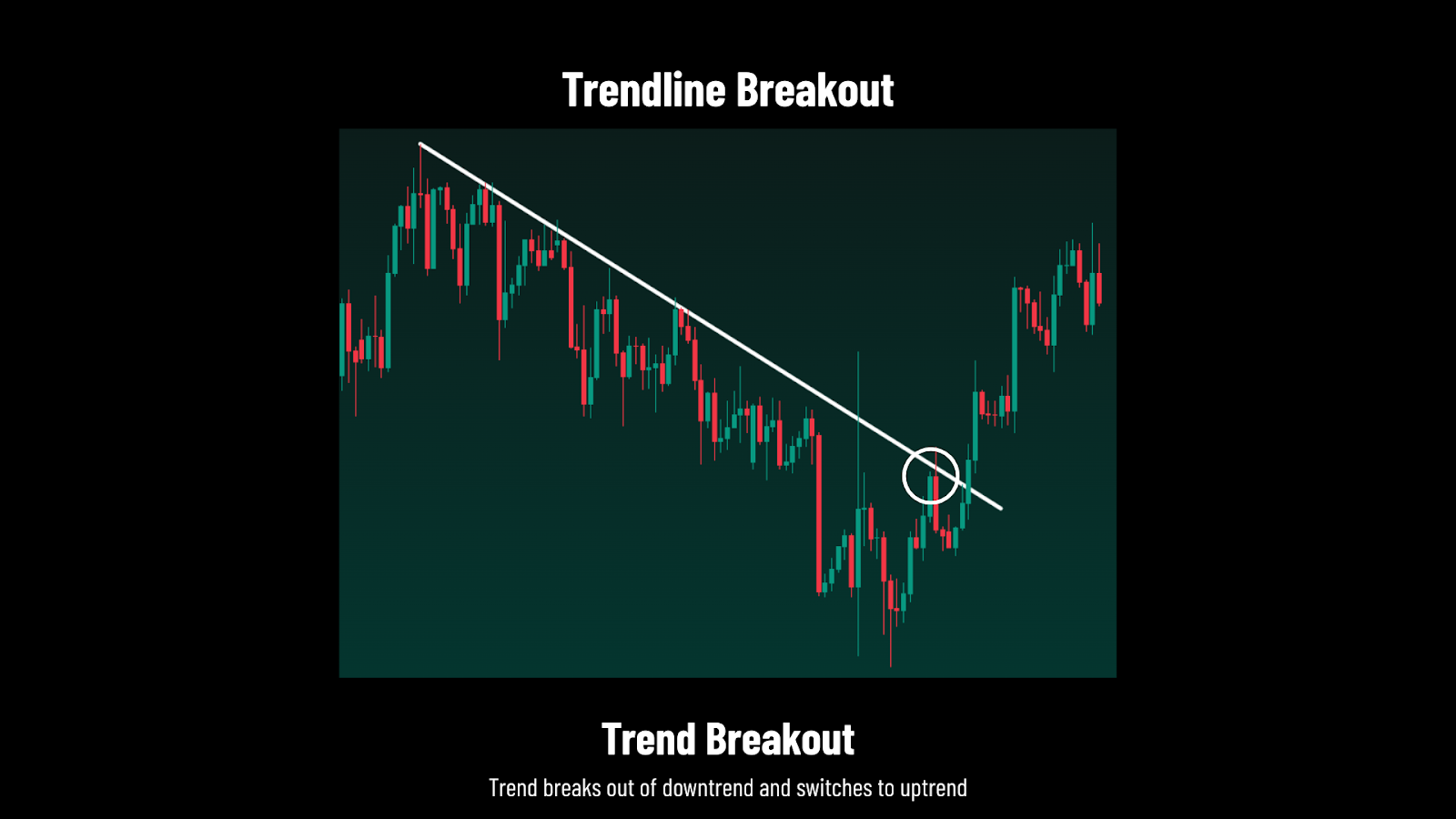
Trendlines aren’t unbreakable. In fact, watching for when they break is often just as important as when they hold.
Momentum & control: A trendline represents which side (buyers or sellers) currently has momentum.
Liquidity sweeps: If a trendline is respected, it means price has already swept liquidity near previous highs or lows along that line.
Confirmation of reversal: A break of both the trendline and nearby swing points often confirms a shift in direction.
⚠️ Before trading this setup, always backtest it. Trendline breaks can look convincing but may turn into false signals without proper confirmation.
What patterns do trendlines occur in?
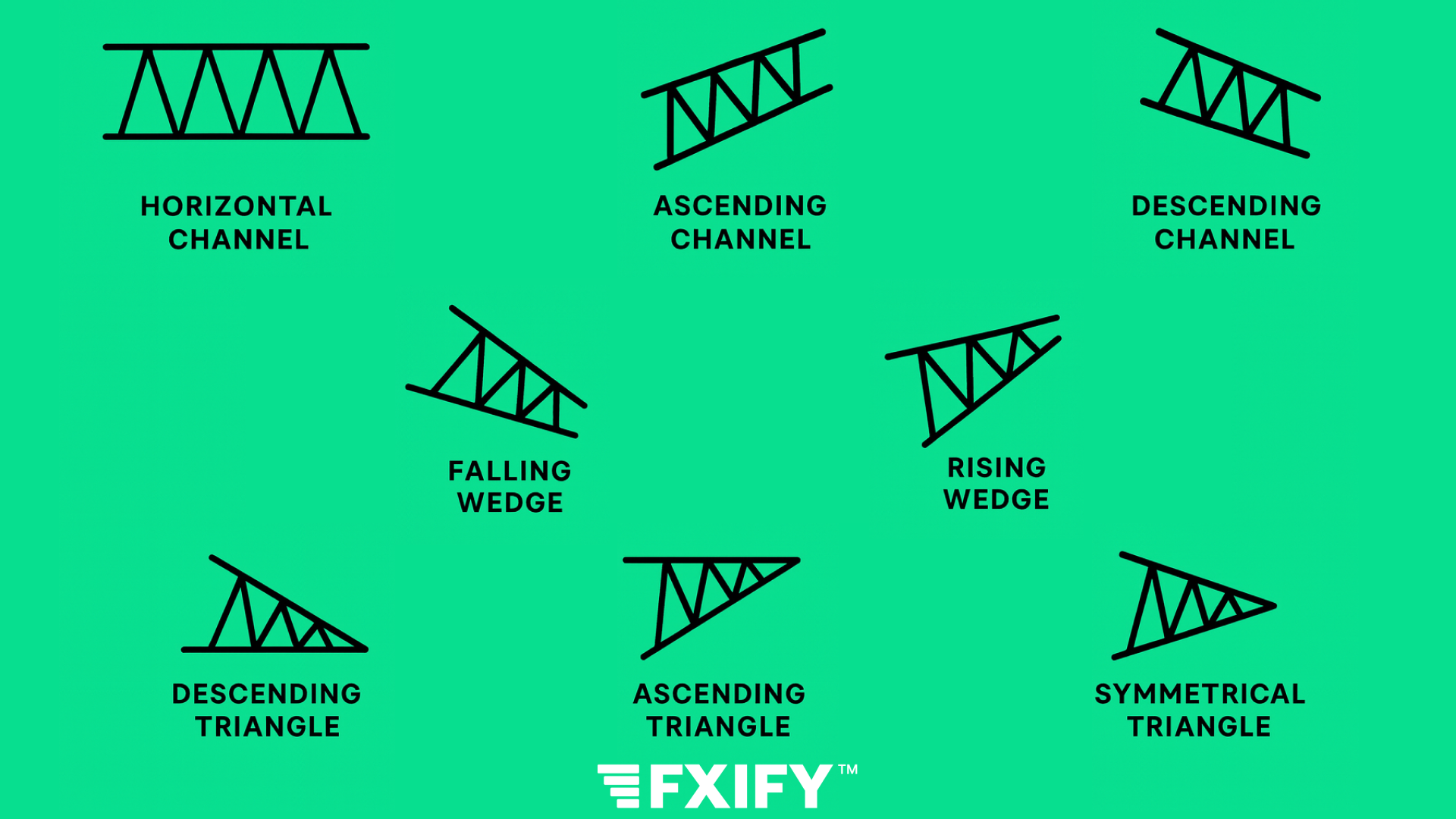
Markets don’t move in straight lines. Price usually rises and falls in waves, and when you connect these highs and lows with trendlines, they start to form clear chart patterns:
Triangles: Created when two trendlines converge, signalling tightening price action and a potential breakout.
Wedges: Slanted consolidations where price narrows, often hinting at an impending breakout or reversal.
Channels: Parallel trendlines that contain price within an uptrend or downtrend, offering potential buy/sell opportunities at the boundaries.
Trading with Trendlines
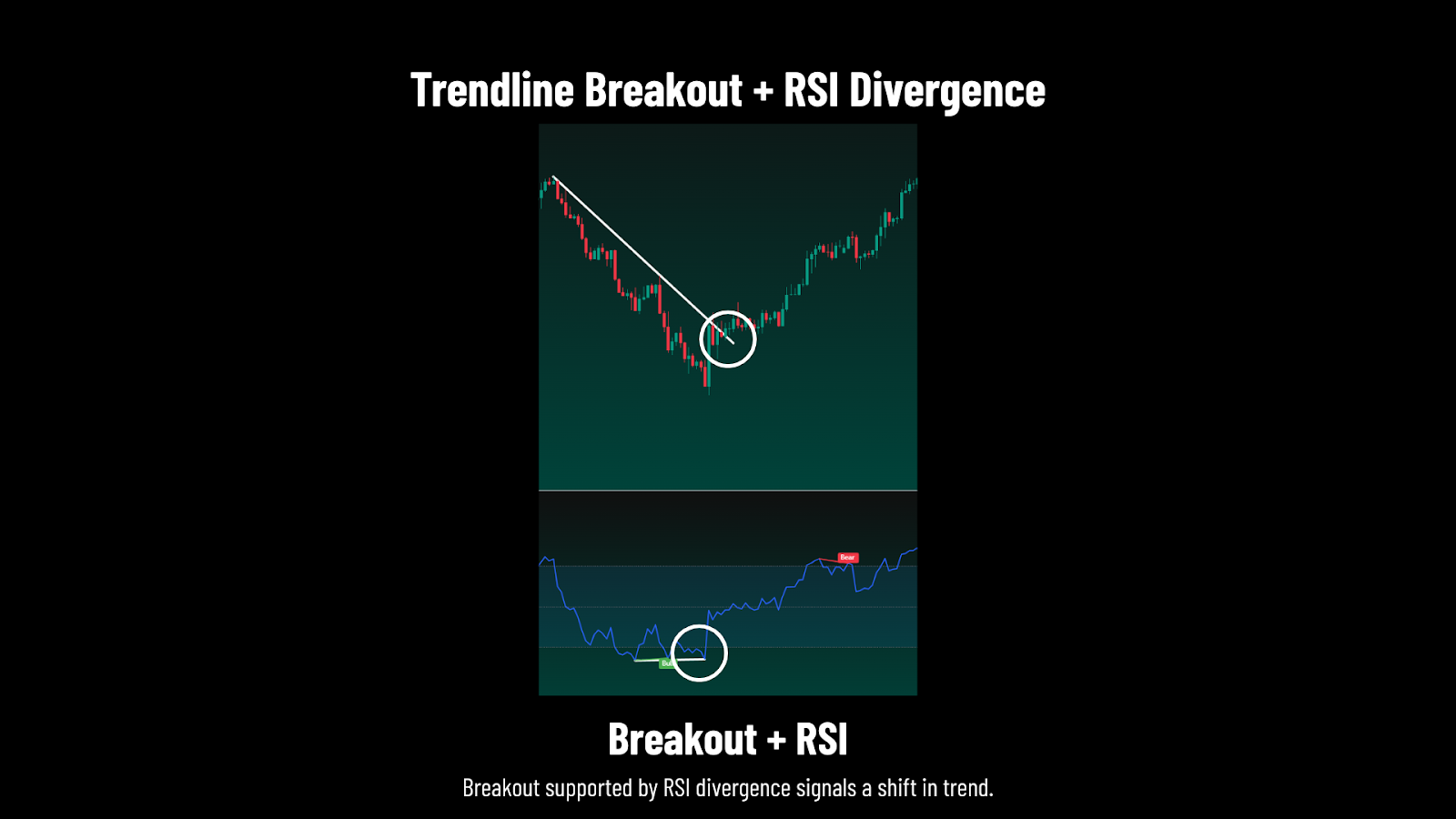
Trendlines aren’t a standalone strategy, but they’re a valuable tool when combined with other methods. Traders typically use them for:
Breakout trades: Enter when price breaks above or below a trendline.
Reversal/Reversion Trades: Enter when price rejects from a trendline (in the direction of the rejection).
Confluence: Using trendlines alongside key levels, supply/demand zones, or Fibonacci retracements to strengthen a trade idea.
Indicator confirmation: Some traders pair trendlines with RSI or moving averages to spot momentum shifts.
⚠️ Whatever approach you choose, remember to backtest first. Build confidence in your system before risking capital.
Conclusion
| Benefit | Why It Matters |
| Simplicity | A single line can make market direction clearer at a glance. |
| Versatility | Works across timeframes and with multiple trading strategies. |
| Confirmation | Adds confidence when combined with other tools like RSI or Fibonacci. |
| Risk Awareness | Helps spot potential reversals when trendlines break. |
Trendlines are one of the most practical tools in technical analysis. They help traders simplify trends, identify key levels in the market, and use them to form trade ideas.
FAQ
Are trendlines subjective?
Yes. Different traders may draw trendlines slightly differently. The key is consistency in how you apply them.
Do trendlines work on all timeframes?
Yes, but they tend to be more reliable on higher timeframes where price structure is clearer.
Can trendlines be used with indicators?
Definitely. Many traders combine them with RSI, moving averages, or volume to improve accuracy.
Are trendlines reliable on their own?
Not always. They work best when combined with other analysis tools for confirmation.
How many points are needed to draw a valid trendline?
At least two points are required, but three or more touches make the trendline more reliable.