


Proprietary Trading vs. Modern Prop Firms: What’s the Difference?
Prop trading has evolved dramatically over the past decade- but how? What are the differences between old school proprietary trading and modern prop firms like FXIFY?
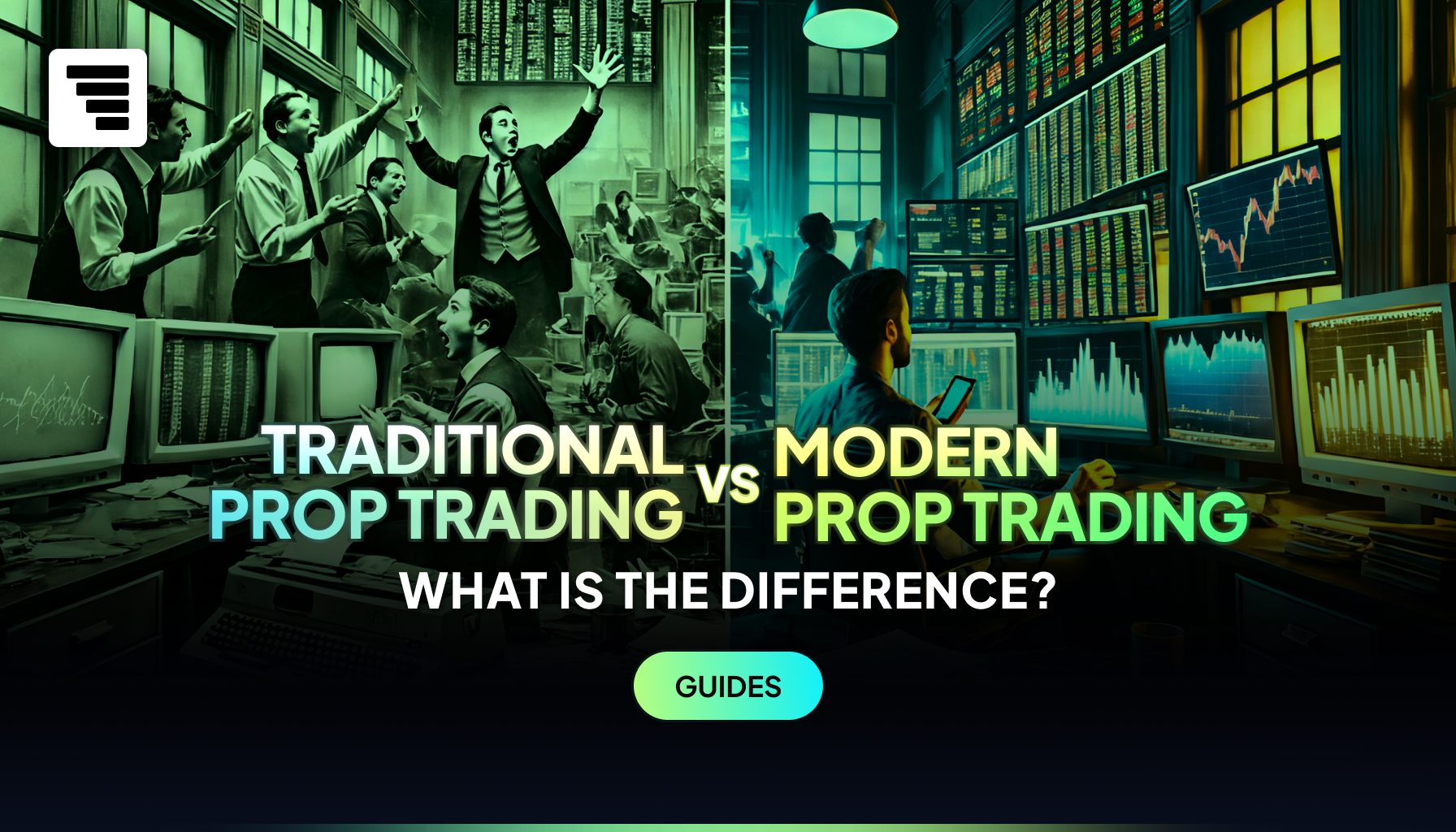
At first glance, proprietary trading and modern prop trading may appear similar, but they represent distinct models shaped by regulatory changes, risk management strategies, and greater access for individual traders.
Traditional proprietary trading evokes scenes like those in The Wolf of Wall Street — bustling, high-stakes trading floors where firms employed traders to speculate with the company’s capital.
Today’s prop firms enable skilled individuals worldwide to trade using simulated capital from their own devices — with no need to risk personal savings. Traders pay only a one-time evaluation fee to demonstrate their abilities before gaining access to a modern day prop firm’s capital.
This approach marks a major shift from traditional proprietary trading, which operated under very different rules, risks, and access requirements.
To understand how prop trading evolved — and where firms like FXIFY fit into today’s landscape — it’s important to first look at how the traditional model worked.
How Proprietary Trading Evolved Into Modern Prop Firms
Historically, proprietary trading was the domain of major banks and investment firms. Full-time, salaried traders worked on-site at in-house trading desks, using the firm’s capital to speculate across markets like equities, forex, and derivatives.
These traders were expected to generate substantial profits — often taking significant risks without direct oversight from external clients.
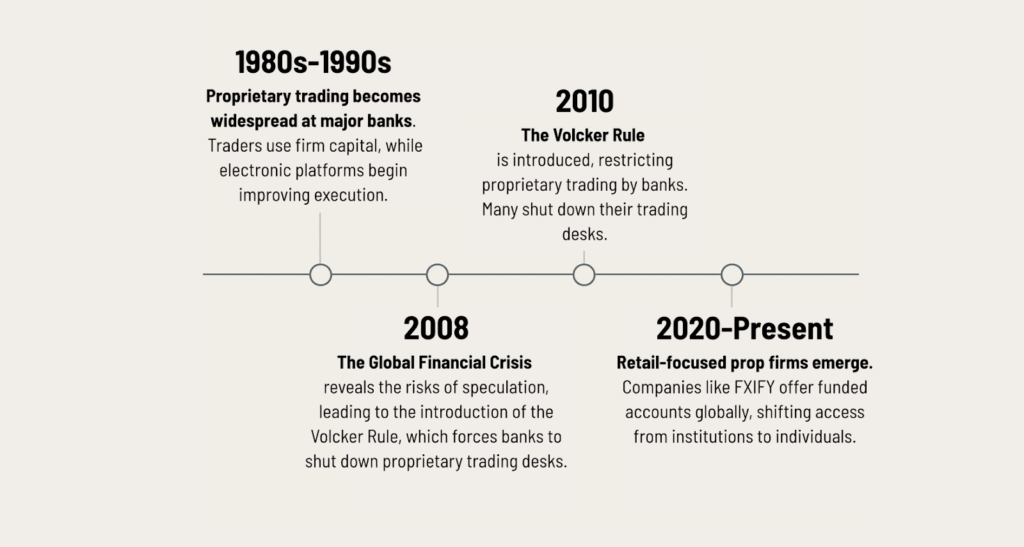
However, this model changed dramatically after the 2008 Global Financial Crisis. In response to the high-risk activities that contributed to the crash, regulators introduced strict reforms, including the Volcker Rule, which prohibited banks from using their own funds for speculative trading.
As a result, most major banks shut down their proprietary trading desks, reshaping the industry’s landscape.

This shift created space for a new wave of independent proprietary trading firms — firms that operate outside traditional banking systems and adopt a performance-based approach to capital allocation.
Key Milestones in the Evolution of Prop Trading
To understand how modern firms like FXIFY came to exist, it’s helpful to look back at the key events that reshaped the prop trading landscape over the last four decades.
How Proprietary Trading Evolved Into Modern Prop Firms
One example is FXIFY, which doesn’t employ traders in the conventional sense. Instead, FXIFY offers skilled individuals the chance to prove their ability through a trading evaluation before gaining access to real capital.
Traders who successfully complete the evaluation can gain access to up to $400,000 in trading capital and retain up to 90% of their realised gains — one of the most competitive payout structures in the industry.
These benefits depend on traders adhering to FXIFY’s clearly defined risk parameters, which are designed to protect both the trader and the firm. These rules promote discipline, minimise potential losses, and encourage the development of sustainable trading strategies.
FXIFY’s risk parameters typically include limits on daily losses, overall drawdown, and restrictions on position size or leverage.
Key Differences Between Traditional Prop Trading and Modern Prop Trading Models
The table below highlights the key differences between traditional proprietary trading models and modern performance-based trading firms, with FXIFY exemplifying how the industry is being transformed by a flexible, trader-focused approach.
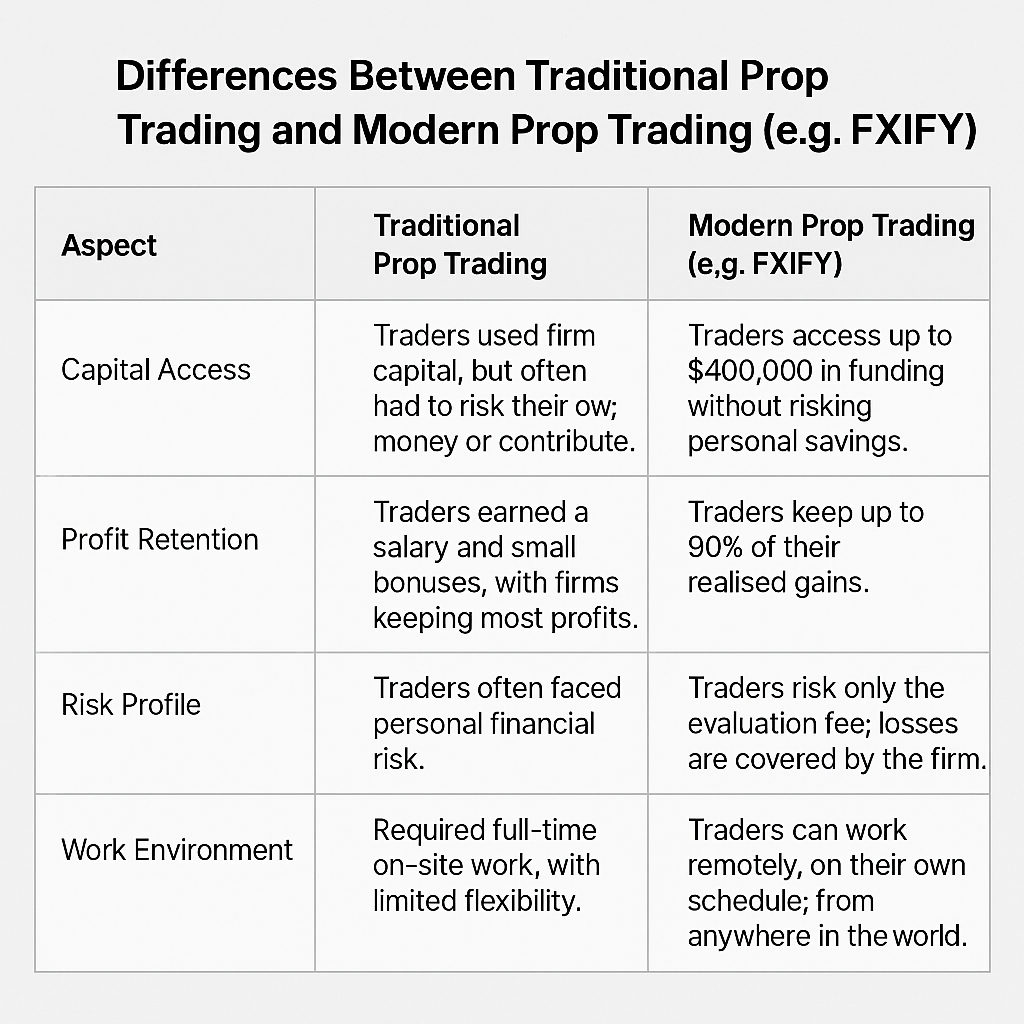
In summary, traditional prop trading required significant personal investment and was limited to institutional setups. Today, firms like FXIFY are changing the game by offering flexible, performance-based models that give traders access to higher capital retention, without the traditional barriers.
This shift has opened the door for a new generation of traders, allowing them to take control of their financial future — no matter their background or location.