

Trading in the Zone — The Book Every Trader Should Read Once
Mark Douglas’s Trading in the Zone is every trader’s wake-up call. It’s not about strategy or setups — it’s about mastering your mindset. A book we all read once, but only understand the second time around.
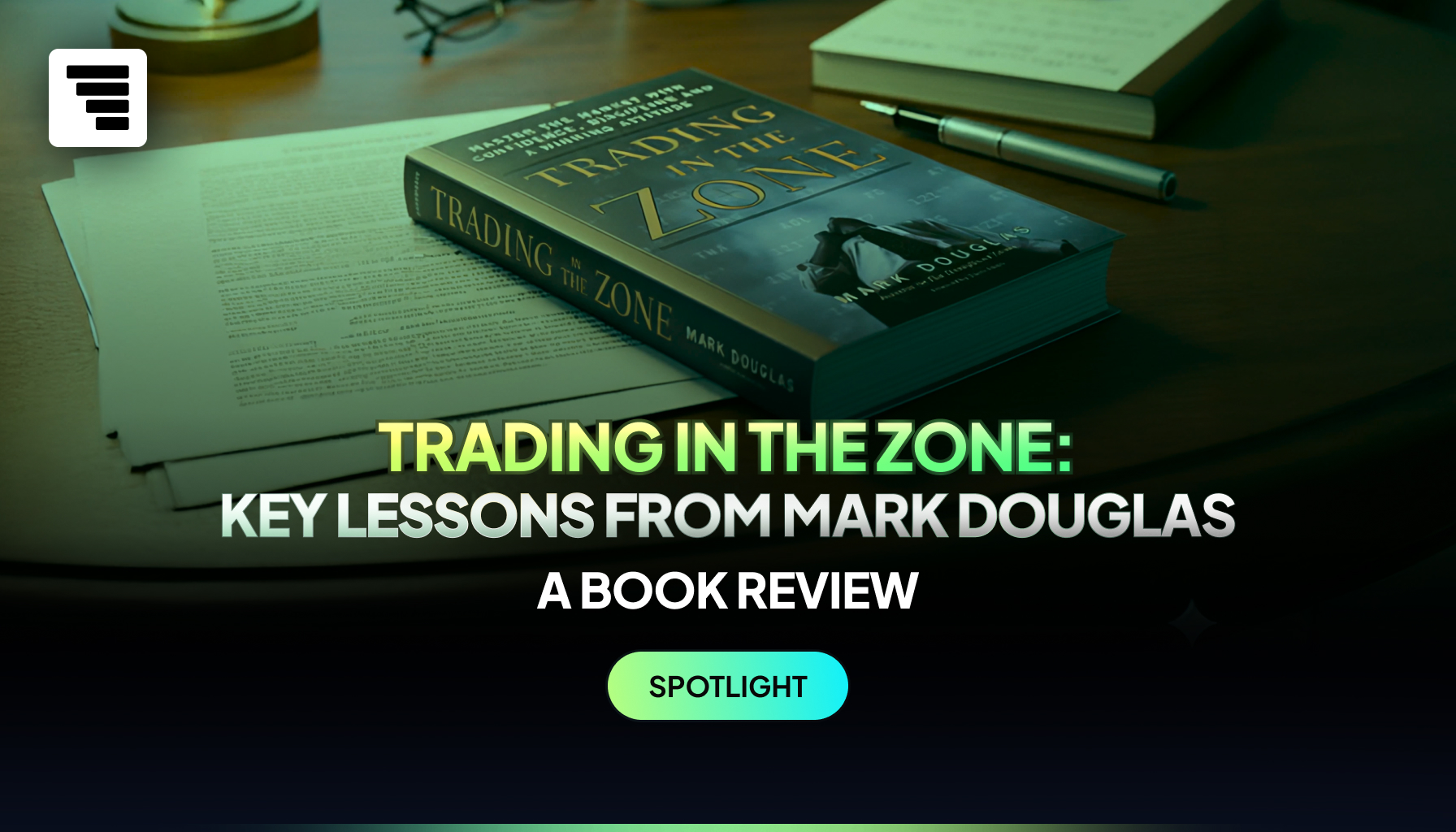
Every trader’s heard of it.
Most of us have bought it.
And almost none of us truly get it the first time we read it.
Mark Douglas’s Trading in the Zone isn’t a book you read once and move on from — it’s one of those you revisit every time you catch yourself breaking your own rules. It’s the psychology reset we didn’t know we needed.
If you’ve ever stared at a chart knowing exactly what you should do… but did the complete opposite anyway — this one’s for us.
“Anything Can Happen.”
That line — “anything can happen” — sounds cliché until you realise how hard it is to truly believe it.
Douglas hammers the idea that trading isn’t about prediction — it’s about probabilities.
It’s about showing up, following your plan, and accepting that outcomes will vary even when you do everything right.
Think of it like running a casino. The house doesn’t care about one hand of blackjack — it’s focused on the next thousand.
Our edge only means something over time.
That mindset alone can take years to internalise.
Why It Hits Different for Traders Like Us
We all think we understand psychology until we start risking real money. Because that’s when theory becomes emotion. Douglas doesn’t tell us to ignore fear — he shows us how to trade with it.
He makes you realise that uncertainty isn’t a problem to solve — it’s the environment we work in.
We’ve all felt that same cycle:
- Skip a setup after a loss.
- Overtrade after a win.
- Move a stop “just a little further” so it doesn’t hit.
It’s not the market punishing us. It’s our mindset reacting to pain, trying to avoid discomfort.
“You Don’t Need to Know What’s Going to Happen Next to Make Money.”
That’s the core shift.
Once you stop trying to predict every candle and just trade your edge — you start breathing again. You stop checking the P&L after every move. You stop needing to be right and start needing to be consistent.
That’s what Douglas calls being “in the zone.” It’s not some mystical flow state — it’s just the absence of emotional noise.
What Stuck With Me Most
A few lessons that hit me harder the second time I read it:
- Discipline isn’t control. It’s accepting that we can’t control the market — only how we respond.
- Confidence doesn’t come from winning. It comes from seeing enough trades play out to trust our edge.
- The market doesn’t care. It’s not against us. It’s not for us. It’s just there.
That shift in thinking makes trading lighter. Losses stop feeling like personal failures. Wins stop feeling like validation. Everything just becomes data. And when that happens, we finally start to trade from a place of calm.
Why We All End Up Reading It Eventually
Every trader I know either has this book on their shelf or plans to read it “soon.” It’s almost a rite of passage.
Because after enough time in the markets, you realise your biggest opponent isn’t volatility, the Fed, or algos — it’s your own head.
Douglas doesn’t give us answers. He gives us awareness. He helps us see that trading success isn’t about finding the next perfect strategy — it’s about finding consistency in ourselves.
And yeah, he repeats himself. A lot. But maybe that’s because it takes repetition to truly change the way we think about risk.
Closing Thoughts
Trading in the Zone isn’t a quick fix. It’s more like a mirror. The deeper we read, the more we see ourselves reflected back — every hesitation, every overreaction, every moment we trade out of fear instead of logic.
It’s not a book about the market. It’s a book about us.
If you haven’t read it, you should. If you already have, read it again — because the first time, you understand the words. The second time, you understand yourself as a trader.