How Long Does It Take to Learn Forex Trading?
You finish your tenth video lesson on a Sunday night. You know what a pip is, and you can name every candle pattern on the…

You finish your tenth video lesson on a Sunday night. You know what a pip is, and you can name every candle pattern on the chart. Then a simple question hits you: am I actually any closer? It is a fair question, but the honest answer has less to do with the calendar than most people think. Here is how long learning forex really takes, and how to tell where you stand today.
| So, how long does it take to learn forex trading? Most trading guides quote anywhere from a few months to two years. We think that range answers the wrong question. Your progress depends on how many trades you practice and review under real rules, not on how many months pass. The five levels below show you how to measure it. |
Key Terms
| Term | What it means |
|---|---|
| Demo account | A practice account with virtual money. You place trades on live prices with nothing at risk |
| Trading plan | Written rules for when you enter, when you exit, and how much you risk on each trade |
| Position size | How big a trade is. It decides how much you gain or lose when the price moves |
| Risk per trade | The amount you are willing to lose on one trade if your stop loss is hit |
| Evaluation | A prop firm test where you trade under set rules, such as a daily loss limit, before you get a funded account |
Why Months Are the Wrong Measure
Picture two traders who both start learning in January. Alan watches lessons for an hour on weekends, but he rarely places a trade. Daniel practices for 30 minutes every weekday, and he writes down why he entered each trade and how it ended.
By June, both have spent six months learning forex. Only one of them has a record of real decisions to look back on.
Time alone tells you very little. What moves you forward is practice you can review: trades you placed, rules you followed, and mistakes you can actually see in your log.
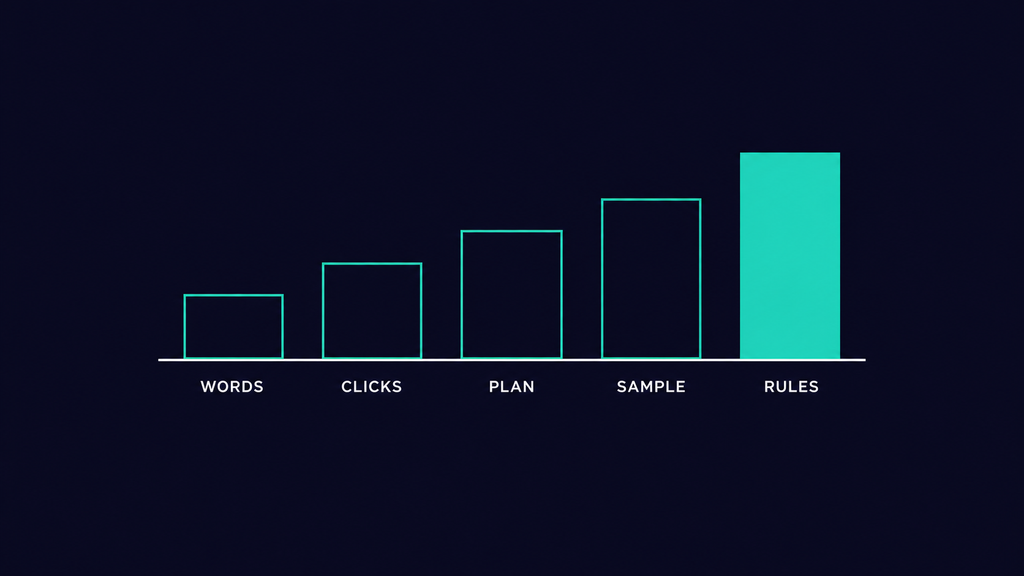
How Long to Learn Forex: The Five Levels
Instead of counting months, check which level you are on. Each one has a clear sign that you are ready for the next.
| Name | You are here when… |
|---|---|
| Words | Terms like pip, lot, spread and leverage make sense without looking them up |
| Clicks | You can place, adjust and close a trade with a stop loss in a few seconds |
| Plan | You have written rules for entry, exit and risk per trade |
| Sample | You have followed your plan across a logged set of demo trades and reviewed them |
| Rules | You can trade your plan inside a daily loss limit and a drawdown floor without breaking either |
Level 1: Words
This is where everyone starts, and it moves fastest. You learn the language of the market. That means what a pip measures, how a lot sets your position size, and why the spread costs you on every trade. Free lessons cover most of it, including the FXIFY trading courses. You are ready to move on when you can read a trade setup without stopping to check a single term.
Level 2: Clicks
Knowing the words is not the same as using them under pressure. So at this level you open a demo account and practice the mechanics until they feel boring. Place a trade. Move the stop loss. Close half. Close the rest.
If you still hesitate over which button does what, stay here a little longer. A wrong click inside a daily loss limit can cost you room you cannot get back that day.
Level 3: Plan
Many learners rush past this step, and it shows later. A trading plan answers three questions before you click anything: why you enter, where you exit, and how much you risk. Here is a simple example. Trade one setup, risk the same dollar amount every time, and stop for the day after two losing trades. It does not need to be clever, because its real job is to be followed.
Level 4: Sample
One positive trade proves very little, and neither does one losing trade. At this level you follow your plan across a logged set of demo trades, then review the results as a group.
How many trades is enough? There is no magic number, but the sample should be big enough that one lucky or unlucky trade does not change the picture. Keep a simple log with the entry, exit, reason and result for every trade.
Level 5: Rules
This is the level most guides leave out. Here you trade your plan inside hard limits, such as a daily loss limit and a maximum drawdown. The skill being tested is not finding a successful trade. Instead, it is staying inside the rules on the days when nothing goes your way. That is harder than it sounds.
You can practice this on demo before anyone tests you. Set your own daily limit in dollars, then stop trading the moment you reach it, even if the next setup looks perfect.
How Your Hours Per Week Change the Pace
Your schedule shapes how fast you climb, so it helps to be honest about it. Treat this table as a guide to rhythm, not a promise of dates.
| Pace | Practice per week | What it looks like |
|---|---|---|
| Light | 2 to 3 hours | Steady progress through Levels 1 and 2, slower once you need a trade sample |
| Steady | 5 to 7 hours | Enough time to build and test a plan alongside a full-time job |
| Focused | 10 hours or more | Faster through every level, as long as the hours include placing and reviewing trades |
That last condition matters most. Ten hours of watching videos will not build a trade sample, but three hours of placing and reviewing trades will.
What Slows Most Learners Down
Picture a learner three months in. He has tried four strategies, each for a couple of weeks, and dropped every one after a few losing trades. Because he never kept a log, he cannot say which strategy worked best.
Last week he opened a small live account before finishing Level 4. He sizes each trade by feel, depending on how confident the chart makes him. None of these choices looks big on its own, yet together they can add months, since every restart sends him back to Level 3.
Where a Prop Firm Evaluation Fits
Level 5 is exactly what a prop firm evaluation tests. You trade under a daily loss limit and a drawdown floor, and you need to reach a target without breaking either.
At FXIFY, most evaluations run without a time limit. So once Levels 1 to 4 feel solid, you can take an evaluation at your own pace. Just remember the inactivity rule: place at least one trade every 60 calendar days. You can compare the FXIFY programs to see which rules fit the way you trade.
FAQs
How long does it take to learn forex basics?
The basics are Levels 1 and 2: the language of the market and the platform clicks. They take the least time of the five levels, especially if you practice on a demo account each week instead of only watching lessons.
Can you learn forex trading in three months?
You can learn the basics in that time. Building a plan and testing it across a real sample of trades usually takes longer, because the sample needs time to grow.
How many hours a day should I practice forex?
There is no fixed number. Short daily practice, such as 30 minutes of placing and reviewing trades, often teaches more than one long block at the weekend.
Is a demo account enough to learn forex?
A demo account covers Levels 1 to 4 well. It cannot fully copy the pressure of real limits, though, which is why Level 5 is worth practicing with your own hard daily limit first.
When am I ready for a prop firm evaluation?
You are ready when you can follow a written plan across a logged sample of trades. You should also have practiced stopping at a set daily loss limit. If you can do both on demo, an evaluation is the natural next test.
The Bottom Line
Most guides will tell you forex takes months or years to learn. A better question is which level you are on today and what it takes to reach the next one. Start with the words and the clicks, write your plan, build a sample, and then practice trading inside the rules. When you are ready for that last test, explore the FXIFY programs and pick the evaluation that fits how you trade.