


Why Sideways Markets Can Break Traders (And How to Survive Them)
A sharp drop feels dangerous right away. A sideways market does not. Price moves a little up, a little down, then back again, day after…
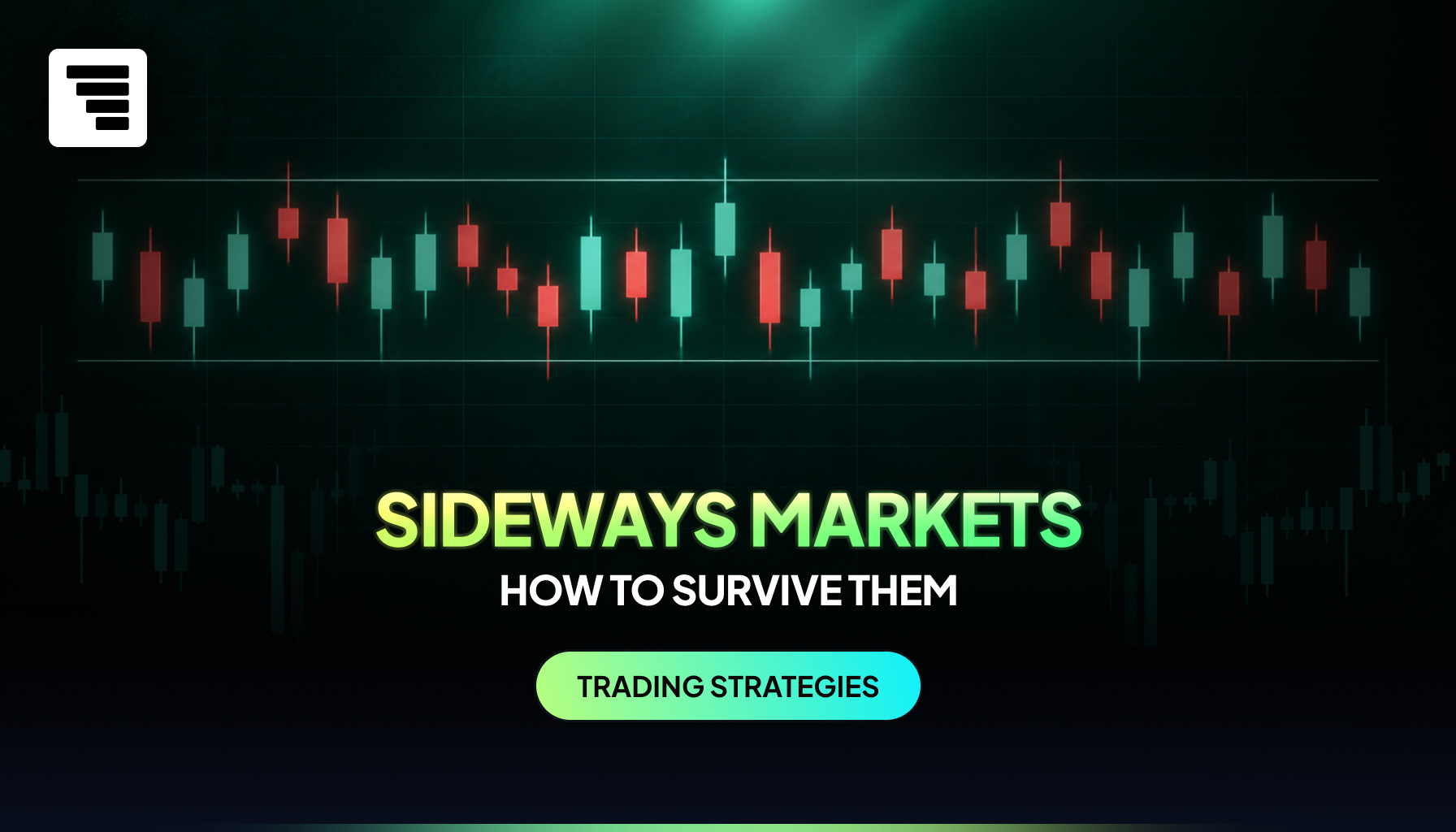
A sharp drop feels dangerous right away. A sideways market does not. Price moves a little up, a little down, then back again, day after day. Nothing about it looks like a threat, and that is the problem. A sideways market wears traders down slowly. It takes one small loss at a time. An account that survives a sharp drop can still fail during a market that goes nowhere. This guide shows you how to spot a sideways market and what it does to a trader’s decisions. Then it shows you how to trade through it without giving the account away.
How to Spot a Sideways Market
A sideways market moves between a support level and a resistance level, without breaking clearly past either one. Price touches the top of the range, turns back. Price touches the bottom, turns back again.
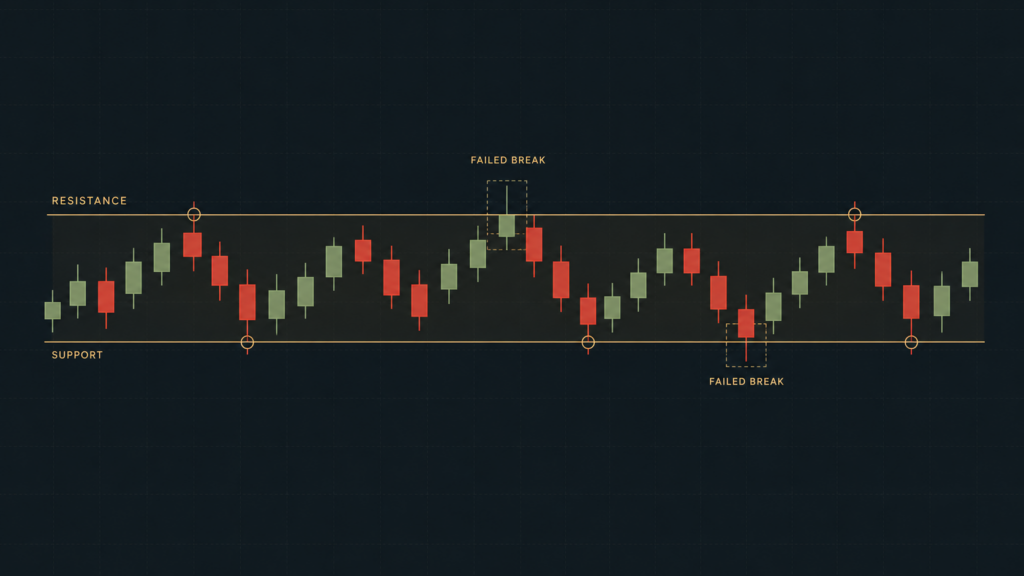
Look for three things on the chart:
- Price stays inside a horizontal range instead of forming higher highs or lower lows.
- Breakout attempts on either side reverse within a candle or two.
- Momentum indicators flatten out instead of pointing in one direction.
None of this shows up right away. A sideways market becomes clear only after price has bounced inside the same range several times. By the time it is obvious, several breakout attempts have likely already cost money.
Why It Wears Traders Down
A trending market rewards patience. A sideways market punishes it in a different way. Price teases a breakout, a trader enters, then price snaps back into the range and the trade loses. This happens again, sometimes within the same day.
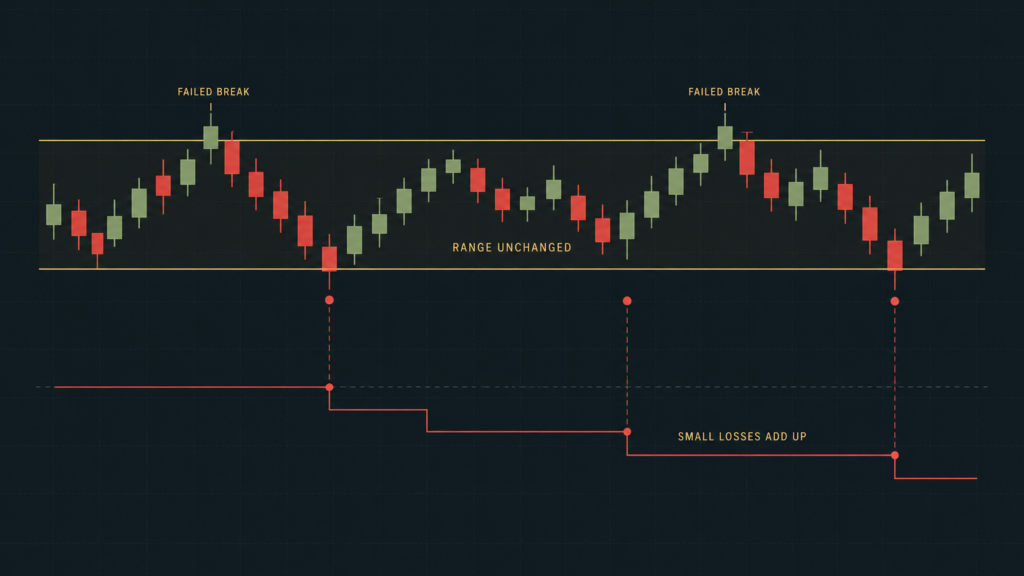
Each loss on its own looks small. Strung together, they add up fast, and they often lead to two responses. A trader either stops trading altogether, or starts entering earlier and sizing up, trying to make back what the range took.
Neither response fixes the problem. The market has not changed. The trader’s account has.
The Behaviors That Break Accounts
Four habits show up again and again in a sideways market, and each one costs more than the last.
- Chasing every touch of the range, instead of waiting for a clear signal at the edge.
- Increasing size after a loss, trying to recover it in one trade.
- Moving a stop mid-trade, hoping the range holds one more time.
- Acting on every breakout attempt right away, before it has time to hold.
How to Survive It
Each of these habits has a direct fix. None of them require predicting where price goes next.
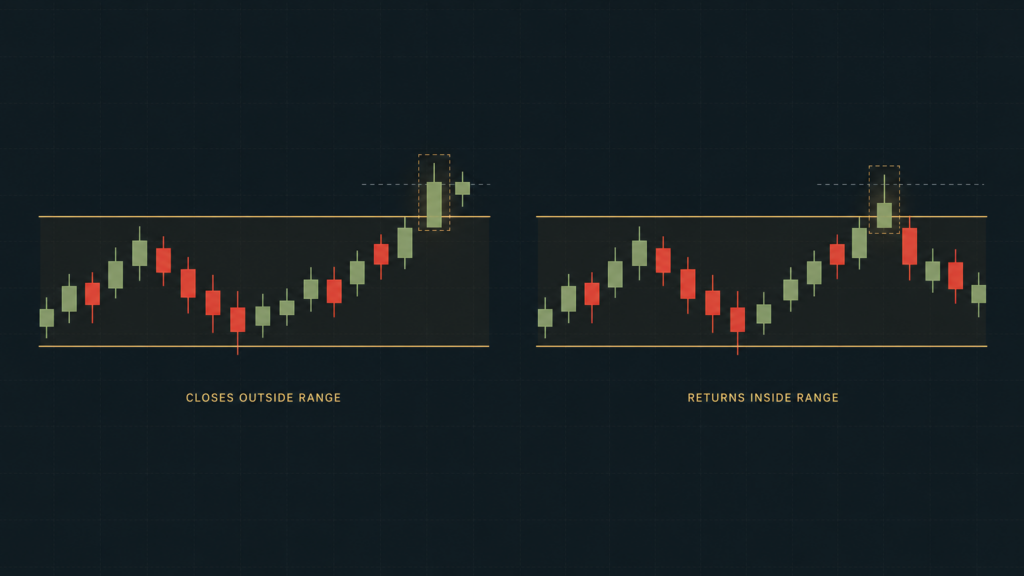
- Trade only at the edges of the range, not every small bounce in the middle.
- Keep position size the same after a loss. Do not raise it to chase back what is gone.
- Set a stop before you enter, and leave it there once the trade is open.
- Wait for the candle after a breakout to close and confirm it before you act.
None of these fixes make a sideways market easy to trade. They make it survivable, which is the actual goal while the range holds.
Protecting Your Account
The habits that drain a trader in a sideways market are the same habits that put a funded account at risk. Chasing every touch of the range. Sizing up after a loss. Moving a stop mid-trade. Each one pushes an account closer to a rule breach it does not need to hit.
When you are ready to trade a sideways market on a funded account, explore FXIFY CFD programs.