



Page background
27% OFF + 2 FREE ADDONS
LUCK27

SAVE WITH OUR EXCLUSIVE PROMOS

27% OFF + 2 FREE ADDONS
Expires: 19th March 2026
LUCK27
27% OFF + 2 FREE ADDONS
Expires: 19th March 2026
LUCK27
27% OFF + 2 FREE ADDONS
Expires: 19th March 2026
LUCK27
27% OFF + 2 FREE ADDONS
Expires: 19th March 2026
LUCK27
27% OFF + 2 FREE ADDONS
Expires: 19th March 2026
LUCK27
27% OFF + 2 FREE ADDONS
Expires: 19th March 2026
LUCK27
27% OFF + 2 FREE ADDONS
Expires: 19th March 2026
LUCK27
27% OFF + 2 FREE ADDONS
Expires: 19th March 2026
LUCK27
27% OFF + 2 FREE ADDONS
Expires: 19th March 2026
LUCK27
27% OFF + 2 FREE ADDONS
Expires: 19th March 2026
LUCK27

Month Forward: October 2025 Key Events Watchlist

October kicks off the final quarter of 2025 with a significant shift in the macroeconomic landscape. The Federal Reserve has officially pivoted, delivering its first interest rate cut of the year in September and signalling more adjustments are likely. This has set the stage for a month where economic data will be intensely scrutinised for its influence on the Fed’s next steps.

Building on our analysis from last month’s forecast, October shifts from if to how fast—the Fed has cut; now the pace is data-driven.

While the Fed turns dovish, other central banks remain cautious. The European Central Bank is in a holding pattern, watching stable inflation, while the Bank of England remains vigilant. This policy divergence, coupled with sticky inflation in the US and slowing global growth, creates a complex environment for traders. Adding to the mix is the start of the Q3 earnings season, which will offer a crucial look at corporate health amid these shifting conditions.

October 2025 Economic Calendar

Taking a look at our FXIFY™ economic calendar, here are our top picks for economic news to look out for in October.

DateAssetEvents
Week One: Oct 1 – 5USDNonfarm Payrolls (Sept)
Week Two: Oct 6 – 12USDFOMC Meeting Minutes
Week Three: Oct 13 – 19USDUS Retail Sales (Sept)
Week Four: Oct 20 – 26GBPUK CPI (Sept)
CADCanada CPI (Sept)
Week Five: Oct 27 – 31CADBank of Canada Rate Decision
EURECB Rate Decision
USDFOMC Rate Decision
USDUS GDP (Q3 advance) & PCE Inflation

October begins with the high-impact U.S. Nonfarm Payrolls report, a key indicator of labor market health. The month is bookended by major central bank decisions, with both the European Central Bank and the U.S. Federal Reserve holding policy meetings in the final week. In between, critical inflation data from the UK, Canada, and the Eurozone will keep traders on their toes.

1. USD – Nonfarm Payrolls (Oct 3)

The monthly jobs report remains a primary driver of market volatility. After a recent slowdown in hiring, traders will be looking for confirmation of the labor market’s health to gauge the Fed’s next move. A weak report could reinforce bets on further Fed rate cuts, while a surprisingly strong number could renew concerns about sticky inflation.

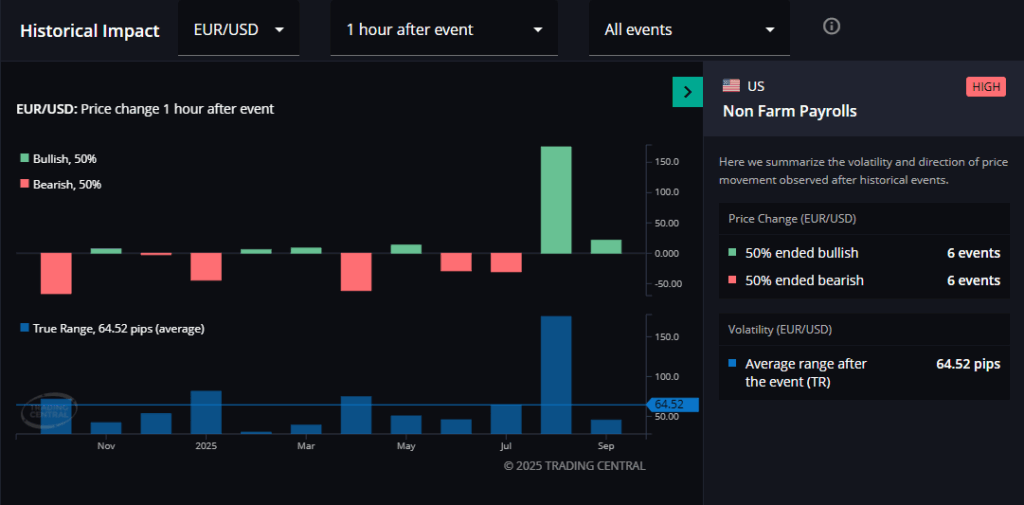
According to the Trading Central Economic Calendar (available in your FXIFY dashboard), the average one-hour move in EUR/USD following recent NFP releases is 64.5, with volatility often high on both sides of the release.
2. EUR – ECB Policy Meeting (Oct 30)

The European Central Bank left rates unchanged in September, noting that inflation was hovering around its 2% target. The ECB is in a data-dependent, “meeting-by-meeting” stance, giving no strong hints about future hikes or cuts. Traders will closely watch President Lagarde’s press conference for any shift in tone, as a dovish lean could weigh on the EUR while a hawkish surprise would provide support.

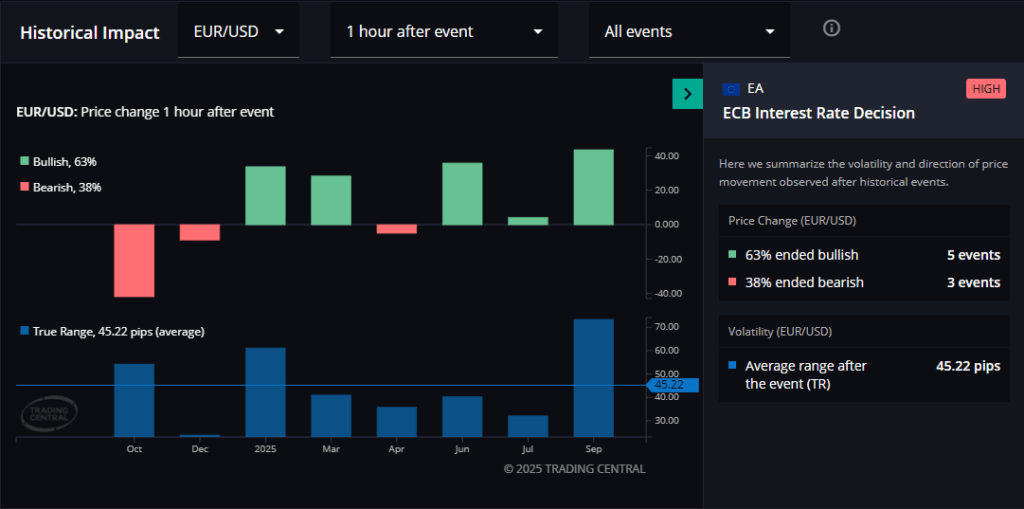
According to Trading Central data, the average one-hour move in EUR/USD following recent ECB press conferences is 45.2 pips.
3. USD – FOMC Rate Decision (Oct 29)

This is the main event of the month. 

After delivering its first 25 basis point rate cut in September, the market widely expects more easing from the Federal Reserve. Projections show most Fed officials see 1-2 more cuts by the end of the year. The focus will be on the policy statement and Fed Chair Powell’s language for clues on the pace of future cuts. Any surprise, like a hawkish pause, could cause significant market turmoil.

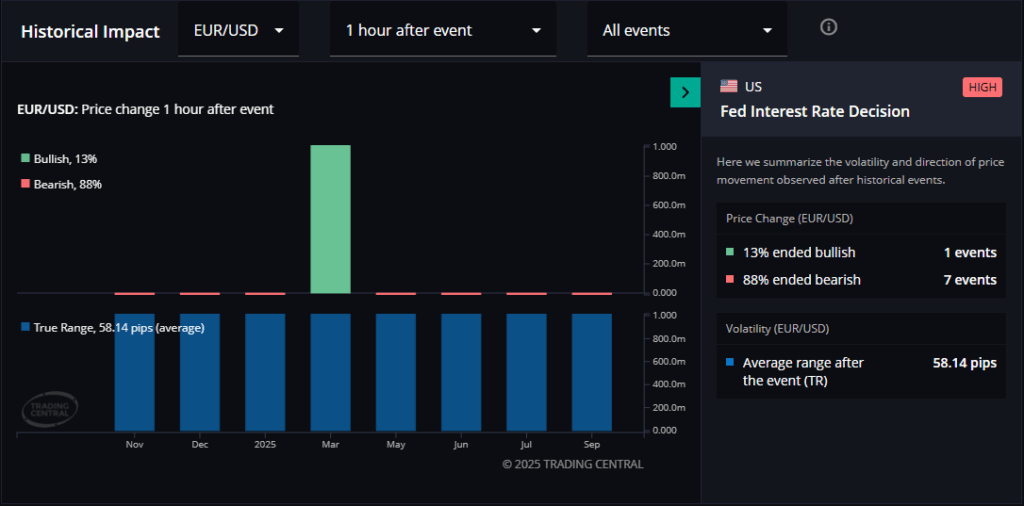
Trading Central data shows that EUR/USD has moved an average of 58.14 pips one hour after the FOMC rate decision.
October 2025 Earnings Calendar

October kicks off the Q3 earnings season, with a heavy focus on the flagship US banks and technology titans. Their results will provide a critical snapshot of corporate and consumer health.

📅 Earnings Calendar – October 2025

DateCompanyTickerSector
Oct 14JPMorgan Chase & Co.JPMFinancials
Oct 14Goldman SachsGSFinancials
Oct 15Bank of AmericaBACFinancials
Oct 22 (est.)TeslaTSLAConsumer Discretionary
Oct 29 (est.)Meta PlatformsMETACommunication Services
Oct 30 (est.)Apple Inc.AAPLInformation Technology
Oct 30 (est.)Amazon.com Inc.AMZNConsumer Discretionary

Key Story: US Dollar Index (DXY) & Gold

This month’s key story focuses on two assets at the heart of the current macro narrative: the US Dollar, which is reacting to a newly dovish Fed, and Gold, which has been hitting new all-time highs.
US Dollar Index (DXY) 

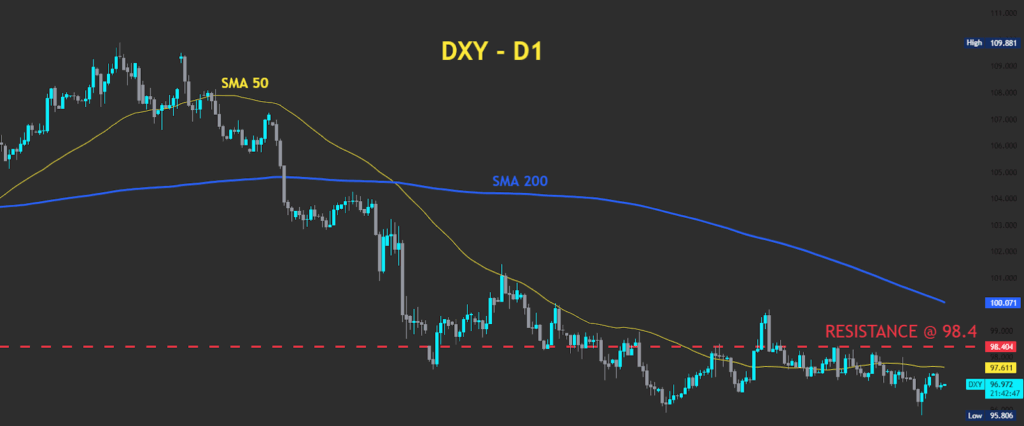
The DXY is in a clear short-term downtrend, reflecting the Fed’s shift to an easing policy. The index is trading below both its 50-day and 200-day moving averages, confirming a bearish bias. Key resistance is located in the 98.0-99.0 zone. A break below 97.0 could signal a deeper slide for the dollar.
Gold (XAU/USD)

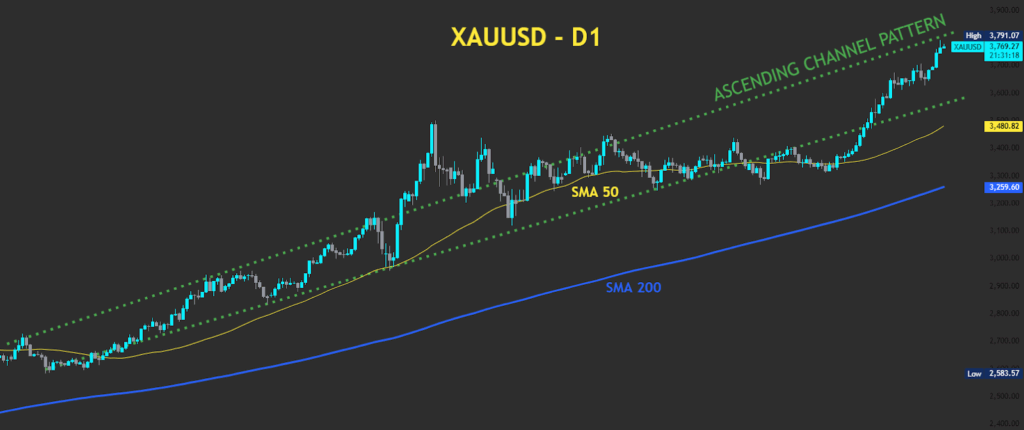
In sharp contrast, Gold is in a strong bull trend, having recently pushed to new all-time highs near $3,791 per ounce. 

The price action is defined by an ascending channel pattern, with higher highs and higher lows. Gold remains well above its 50-day and 200-day moving averages, confirming the long-term uptrend. Key support is the lower boundary of the channel, currently trending in the $3,550-$3,600 area. As long as this channel holds, the trend favors a continuation toward and beyond the recent high of $3,791.”

Wrapping Up October’s Outlook

October is set to be a pivotal month. The Federal Reserve’s new easing stance has put a spotlight on incoming data, making the NFP and PCE inflation reports crucial market drivers. With the DXY showing technical weakness and Gold demonstrating strong bullish momentum, the stage is set for a volatile Q4 kick-off.

Whether you’re trading indices, FX, crypto, or commodities, staying updated on the evolving narrative will be key to staying prepared. As always, approach high-impact weeks with a plan. With your FXIFY account, be sure to track these key events using the Economic Calendar. Trading Central’s Featured Ideas and Technical Views can support trade planning and identify setups around news catalysts.
FXIFY Trade of the Month: August Recap

Top 5 Payouts of the Month

RankTraderAccount (Plan)Payout (USD)Biggest Win (USD)
1Anthony D.$200K – One Phase – RAW11,944.132,583.00
2Tsvetomir V.$75K – Instant Funding – RAW11,144.666,676.00
3Juan G.$100K – Two Phase – RAW10,170.005,348.00
4Georgi G.$200K – Two Phase – LIVE8,576.532,788.50
5Borislav T.$200K – Two Phase – LIVE7,920.006,000.00

Note: One of August’s top payouts came from an Instant Funding account — a good fit for traders who want to skip evaluations and start trading funded capital right away.

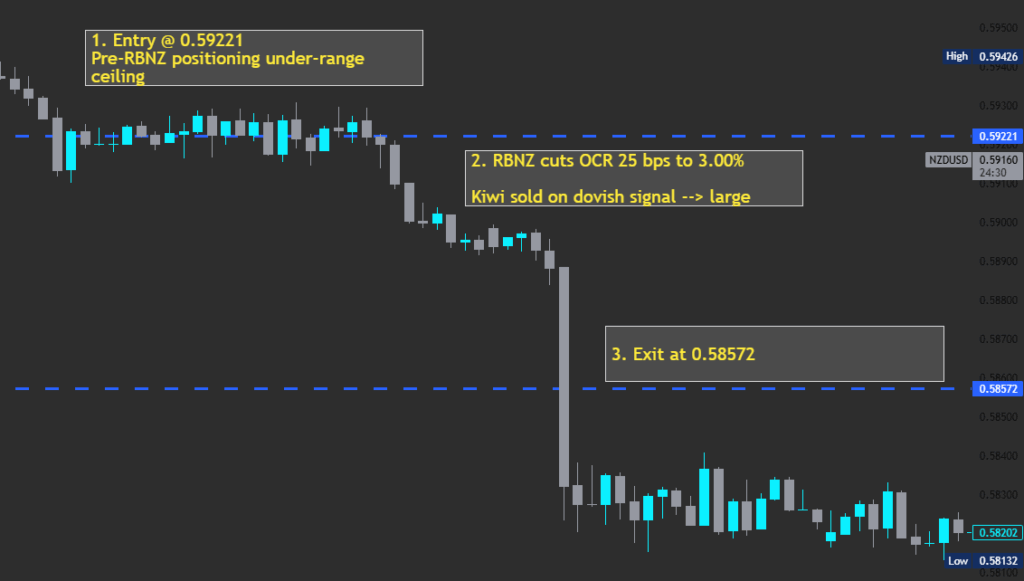
Trade of the Month — Roland J. pockets $25,960 on NZDUSD (Short)

$25,960NZDUSD
14 HRS  
Gain RealisedPair TradedHolding Time

Setup: Event-driven short — central-bank window; pre-event range failing near 0.592x.

Entry: Short 0.59221 as price stalled beneath the prior-day range top; plan to hold through the announcement and into first support.

Exit: Take-profit 0.58572 at the first liquidity shelf after the impulse drop. 

Risk: Invalidation = 15-min close back above the range top; stop sized by ATR(14); partial size pre-event, add on post-event retest only if structure holds.

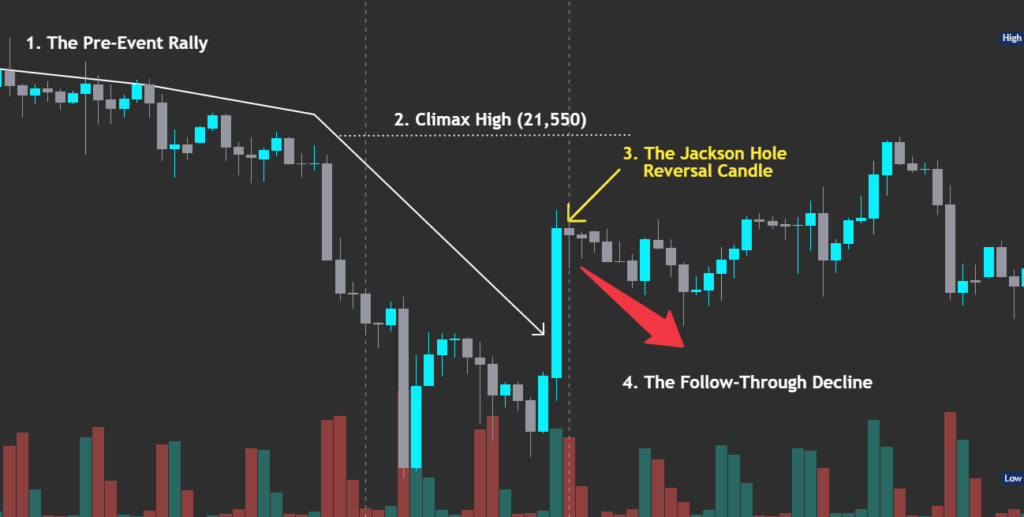
Move of the Month: NASDAQ100

Start DateAugust 22, 2025
End DateAugust 29, 2025
Starting Price21,550
Ending Price20,800
Point Change-750 points
Percentage Change-3.48%

August saw the NASDAQ100 rally, driven by anticipated Fed rate cuts, peaking before the Jackson Hole symposium. However, Powell’s hawkish stance shocked markets, leading to a high-volume reversal at the “Climax High” and a “Jackson Hole Reversal Candle” . 

Patient traders would have shorted after this confirmed reversal. This was followed by a week-long “Follow-Through Decline” , demonstrating the power of event-driven volatility and market reactions.

Top Traded Assets of August

SymbolTotal Trade Volume (USD)% Change M/M
XAUUSD$35,611,489,747+4.59%
EURUSD$8,303,561,754 +2.32%
NASDAQ100$7,498,672,492 –0.86%
DJ30$4,058,096,580 -3.24%
GBPUSD$3,291,071,025 -2.26%

GOLD

Gold’s August movements were driven by Fed expectations. It initially fell against a stronger dollar before rebounding as the dollar softened. This paired with 2.9% CPI, hinting at careful rate cuts. Intraday traders saw clear London breakouts into New York pullbacks, offering many breakout-and-fade chances with tight invalidation points.

EURUSD

EURUSD reflected a policy tug-of-war. Euro-area inflation at 2.1% kept the ECB on “hold and watch,” while US CPI at 2.9% and Jackson Hole comments suggested cuts “if needed.” This led to two-way flows: euro strength on softer USD days and quick reversals when US data firmed. Tactical traders used session structure, yielding multiple rotations.

NASDAQ100

Tech dominated August’s macro story—rates expectations vs. growth multiples. Nasdaq hit new records on cut hopes before swinging as desks squared risk. Intraday traders found a rich mix: opening momentum, midday VWAP reversion, and late-session squeezes. If-then plans were rewarded, and liquidity was ample with clear structure.

The Next Top Trader Could Be You!

This month, Roland J. showed what calm execution looks like—banking $25,960 on NZDUSD (short). 

He waited for the post-news bounce to fail, then took the second move: a fade back toward pre-news balance with risk capped above the failure. That’s the habit we champion—map the players, plan the if-then, act when the market confirms.

Building on recent winners in the FXIFY™ community, Roland’s trade sets a clean benchmark for September. Every month brings fresh catalysts and fresh chances for disciplined traders. If you’re ready to level up, let this be your nudge: keep risk inside your daily limits, trade your plan, and let the edge compound.

Account Type:$400K Two-Phase
Top AssetNZDUSD
Lot Size:40
Biggest Win$25,960
Trading Time:Intraday

Can Game Theory Improve Your Trading?

Markets are multiplayer, not solo. You never trade alone. Each order meets another order, and the trader on the other side of your position has their reasons. Sometimes they’re hedging, sometimes they’re hunting, sometimes they’re trapped. 

Game theory is a simple way to think ahead: if I make this move, how might they respond, and what does that do to my outcome?

Game Theory, In Plain English

Game theory studies decisions where payoffs depend on what other players do. In markets, “players” include retail traders, funds, and liquidity providers — all contributing to the order flow of the markets.

You don’t need equations; you need a habit of asking one small question before you act: if I do X, what might they do next, and what would I do after that? For a quick primer on why trading isn’t a coin flip, start with our related read: Is trading a 50/50 game?

Why This Matters To Traders

Price often looks random until you map incentives. A pop above a clear high can be a clean breakout, or it can be exit liquidity for someone unloading risk. When you treat moves as choices by other players rather than fate, you stop chasing and start planning. That small mental pivot turns reactive trades into prepared scenarios.

The Building Blocks

  • Players: retail, funds, market makers, liquidity providers, news algos.
  • Payoffs: profit, loss, daily drawdown, survival to trade again.
  • Information: price, volume, news, positioning; plus hidden intent you infer.
  • Strategies: enter, exit, hold, bluff, trap, wait.
  • Equilibrium: points where pushing further offers little edge because the other side has adjusted.

These basics are enough to operate like a strategist instead of a tourist. You are not trying to predict every market move; you are trying to plan for the most likely responses to your action.

The Anticipation Loop

Before any trade, run a tiny mental flowchart. If I buy here, who benefits and how could they reply—absorb and fade me, or continue and squeeze others? If they fade, do I reduce, flip, or stand aside; if they continue, where do I add without breaking risk? If nothing happens, what’s my clean scratch that preserves headspace?

Where You See These “Games” Daily

Stop hunts are the textbook example. Price dips through a cluster of obvious stops, fills the order book, and snaps back as the trapped side exits. What looks like chaos is often a deliberate run on liquidity to fuel the next leg.

Fake breaks follow a similar script. A push through a level lures late entries; then the market flips back inside the range and runs the other way. The late crowd becomes fuel, and the early planners take the other side with defined risk.

News whips look violent but often resolve into balance. The first spike reprices information quickly; the follow-through depends on how much positioning was leaning the wrong way. When the second push cannot extend, the fade back toward the pre-news area is the “game” closing its loop.

Crowded trades build like a slow wave. The story is perfect, social proof is loud, and entries are sloppy. When the unwind starts, it’s not personal; it’s just the bill for impatience coming due.

SMC & Wyckoff, Through The Lens

Wyckoff’s “composite man” is a useful cartoon: imagine one large actor orchestrating accumulation, mark-up, distribution, and mark-down. You won’t see his face, but you can observe his footsteps—where liquidity sits, how supply is absorbed, and when price is allowed to run.

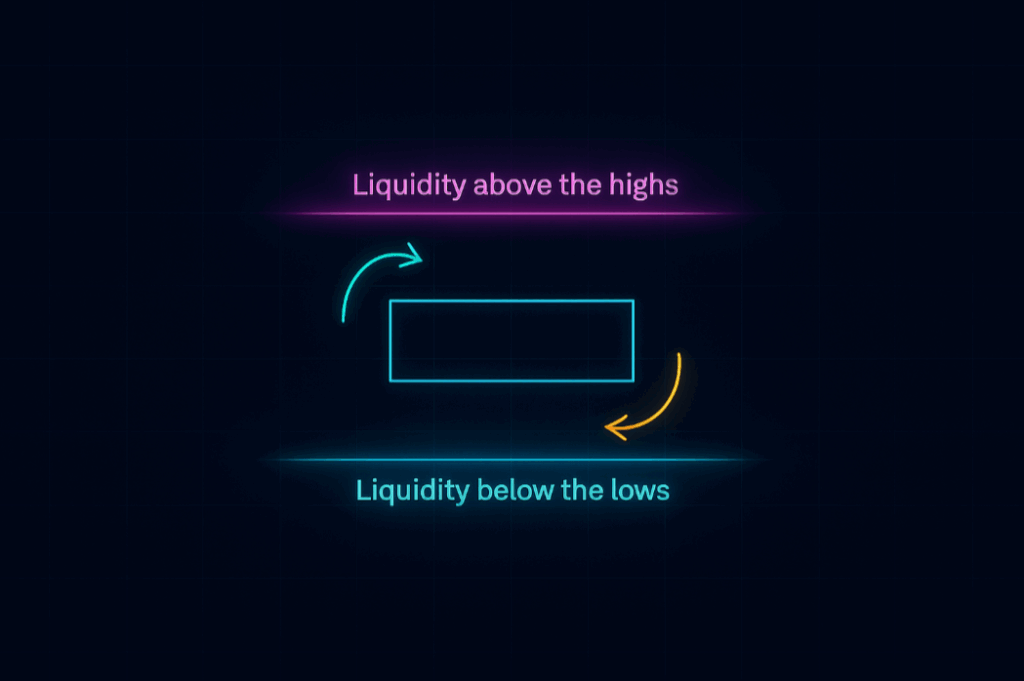
Smart Money Concepts leans on those ideas in modern language. You map liquidity pools above equal highs and below equal lows; you expect sweeps where stops are obvious; you plan for springs and upthrusts that “show one thing, do the other.” This is not mysticism; it’s a practical way to think about how a bigger player tidies the order book before moving the price.

Everyday “Games” You Already Know

  • Prisoner’s dilemma: in stress, many defect early—panic exits into lows or FOMO chases into highs.
  • Stag hunt: you can go early for a risky reward or wait for robust confirmation; coordination matters.
  • Signalling games: a big print, a spoof ladder, a timed push near session open—signals can be honest or deceptive.
  • Coordination: round numbers and prior highs act as Schelling points where many players meet.

You’ve seen these patterns even if you didn’t label them. Naming the “game” helps you choose sensible responses instead of emotional ones.

A Practical Playbook

Start with an opponent model for the session. Who is likely to be active—trend followers, options hedgers, or a thin book where small orders move price? This shifts you from chart-gazing to player-mapping.

Write simple if-then paths. If we sweep above the range and close back inside, I look for the fade on the retest. If we break the range and hold above, I stop trying to be clever and join with tight invalidation.

Use confluence rather than single signals. Structure plus liquidity plus timing beats “one indicator says buy.” Your best trades often have alignment across those three.

Protect survival first. Keep position size inside your daily drawdown rules so one idea cannot end your day. Game theory is pointless if you cannot stay at the table.

Hide your exits beyond obvious clusters. If your stop sits where everyone else puts theirs, you’ve donated your plan to the crowd. Give price a little room to be noisy without paying extra tuition.

Let alerts work for you. Set clean levels and step away from tick-by-tick noise. If the market wants you, it will ring the bell.

A Scenario You Can Trade

Game theory asks: if I act here, how will others reply—and what does that do to my outcome?
This setup shows how a crowd’s first reaction to news can create a second, better move for you.

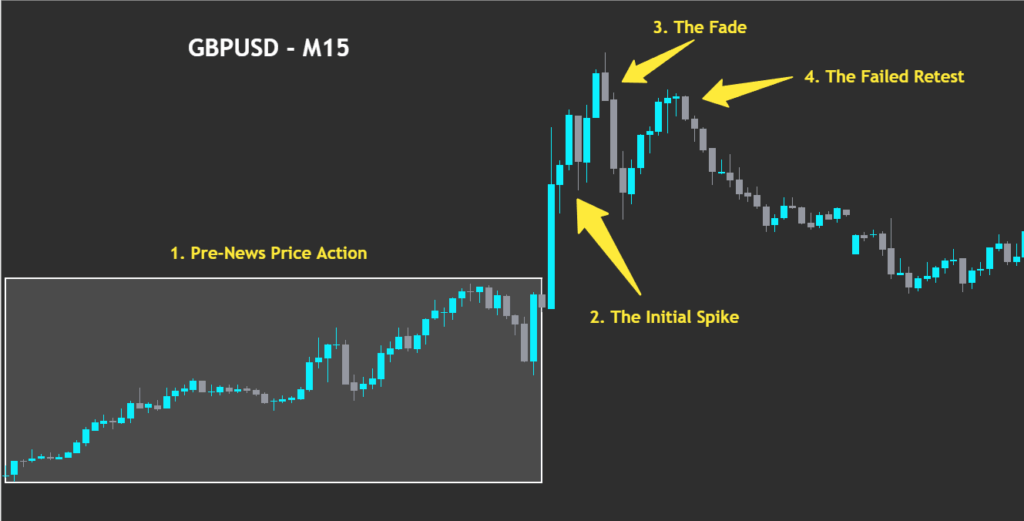
News spike and fade (GBP/USD, M15 — 5 Sep 2025, NFP 12:30 UTC)

A weak NFP print sends GBP/USD higher fast.  

The first pullback fails to extend; a second push stalls below the news high.  

That’s the cue: the move is tired, and the fade back to pre-news balance is on.

*GBP/USD 15-minute on 5 Sep 2025 (NFP 12:30 UTC). Price spikes on the data, fails to make a new high on the retest, then fades back to the pre-news area.

How to trade it

  • Trigger: second push fails below the news high.
  • Entry: short on the reclaim back inside the post-news structure or on a retest of the failure level.
  • Invalidation: hard stop above the news high plus a small buffer.
  • Targets: pre-news balance, then a full fade if momentum stays weak.
  • Timeframes: M5–M15.

Pitfalls To Avoid

Analysis paralysis is the silent killer. A tidy plan executed at B-plus is better than a perfect theory never clicked. Narratives feel good, but confluence pays the bills.

Beware of overfitting. Yesterday’s trap was yesterday’s game; today’s players might choose differently. Look for rhymes, not carbon copies.

Respect resource mismatch. You will not out-react a news algo inside the first second. Work where your advantages live: clear plans, patient entries, and disciplined risk.

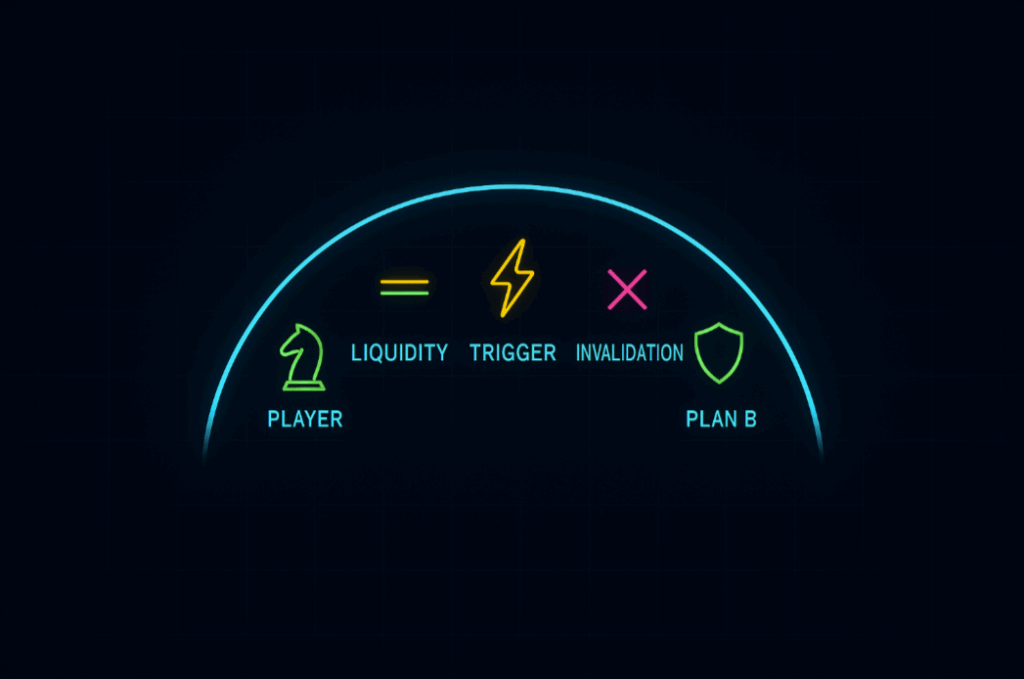
A 30-Second Pre-Trade Checklist

  • Player map: who benefits if we move into this level now?
  • Liquidity map: where are obvious stops and optional “fuel”?
  • Trigger: what confirms the idea quickly and cleanly?
  • Invalidation: where am I simply wrong, no debate?
  • Risk: does my lot size fit today’s limits?
  • Plan B: if it fakes, what is my next move without anger?

Keep this list near your keyboard. It stops the spiral into revenge trading and keeps your decisions repeatable.

Timeframes And Conditions

Day traders see more “games” around session opens and major data. The open sets who’s trapped; data decides who must adjust. Your edge is knowing when to engage and when to wait for the second move.

Swing traders lean on higher-timeframe structure and positioning. Funding, open interest, and commitment of traders data can hint at crowded sides. You still wait for a clean trigger; you just do it with more context behind you.

In trends, the safer entries often appear after a trap against the move. Let the market sweep, then join as it flips back in line with the main flow. In ranges, you fade edges when the liquidity is obvious and the middle is mush.

Where This Fits With FXIFY Traders

Our model rewards discipline over drama. No time limits mean you can wait for clean if-then triggers instead of forcing trades. Dashboard analytics help you review your branches after the fact: what you planned, what happened, and how you responded.

Trading Central tools add context to your player map. Economic calendars, news, and sentiment help you guess which games might show up. The point isn’t to be clever—it’s to be prepared.

Fast payouts and flexible evaluation options exist to back serious process. A game-theory mindset keeps you inside daily risk rails while you build a durable edge. Capital protection first; profits are a by-product of repeatable decisions.

Wrap-Up: Think One Move Ahead

See opponents, not random ticks. Ask the next-move question before you act, then manage the reply calmly. Trade small enough to survive and often enough to learn. When you need a refresher on why odds tilt with context, revisit the 50/50 piece, then update your playbook.

Is Trading a 50/50 Game? The Real Truth About a Trader’s Edge

Fact or Myth?

Short answer: It’s a myth.

Trading outcomes aren’t independent coin flips. Markets carry memory and context—trend strength, key levels, volatility, and catalysts. 

A long entry after a long rally isn’t “neutral”; it’s higher risk if momentum is fading or news looms. Disciplined traders don’t hunt certainty; they look for conditions that favour a better long-run outcome.

Two-panel graphic on dark blue: left shows a silver coin on a glow; right shows a cyan price line rising with one dot touching a faint support line; thin vertical divider between panels.
Figure 1: A coin toss is independent; markets aren’t. Context tilts probability.

So, what market conditions actually tilt the scales?

Successful trading isn’t a single big win that drifts back to breakeven. Context guides idea selection, risk, and expectations across many trades.

  • Price action: Candles, chart patterns, and support/resistance show how buyers and sellers behaved. These act like market memories that inform the next decision.
  • Trend analysis: Trade with the current, not against it. Higher-timeframe direction often sets easier probabilities for the lower timeframes.
  • Timeframes: What’s down on a 5-minute can be up on a 4-hour. Align your setup with the timeframe your plan is built for.
  • Fundamentals: Earnings, rates, data releases, and geopolitics move flows. Ignoring real-world catalysts is naïve.
  • Sentiment: Positioning and long/short ratios flag crowded trades. Extremes can unwind violently and mark turning points.

When several of these align, you have confluence—not certainty, but a stronger case.

Why do people believe trading is 50/50?

Two reasons: headlines and headspace.

Headlines

In the boom years of the 70s and 80s, financial media thrived on spectacle. Stories like “Monkeys beat the pros” made waves because they turned Wall Street into a punchline. We’ll dig into that example later, but the point here is simpler: headlines are built to shock and sell. They flatten nuance into controversy, and when you look closer, most of them crumble.

Headspace

Then there’s the trader’s mind. Fear, greed, and overconfidence warp perception. A string of losses feels like bad luck, and a lucky win feels like genius. If you chalk it all up to chance, you never confront the harder truth: it’s your process, not the market gods, that decides survival.

DEBUNKED #1: The Monkey That Beat the Pros

In the 1970s, markets were riding waves of optimism and academics were sparring over whether stock-picking skill really mattered. Burton Malkiel dropped a bombshell in his book A Random Walk Down Wall Street with a cheeky thought experiment: blindfold a monkey, let it throw darts at the stock page, and you’d mimic a pro’s portfolio. The image caught fire because it poked fun at Wall Street’s mystique.

Then the experiments really did happen — though it wasn’t monkeys tossing darts, but Wall Street Journal reporters in the 1980s. They blindfolded themselves, hurled darts at stock listings, and built portfolios wherever the darts landed. To everyone’s surprise, some of these dart-picked portfolios actually held their own against seasoned analysts, even outperforming in certain contests. That irony was catnip for headlines, and it fed the belief that luck could beat skill.

But the logic breaks down:

  • Regime bias: Many contests ran in strong uptrends where most baskets did well, so yes, even a monkey could do well.
  • Cherry-picking: Wins were amplified because the irony was newsworthy. Misses (where the monkeys lost) were lost to time because it wasn’t shocking or interesting.
  • Faulty leap: Occasional random success ≠ skill is irrelevant. Yes, the markets can be random at times, but you can iron out a process which helps you tilt the scales in your favour.


Figure 2: Sensational headlines ≠ sound inference about how markets work.

Takeaway: The dartboard story highlights how powerful market regimes can be—but it doesn’t erase the value of analysis, rules, or risk control.

DEBUNKED #2: Coin-Flip Strategies That “Work”

Tom Basso and Van Tharp popularised a test where entries were random (coin flip), but exits and position sizing were rules-based: ATR-style trailing stops that only move in your favour and about 1% risk per trade. 

Results showed you can be right roughly ~38% of the time and still make money—because process beats entry magic.


Figure 3: Positive expectancy—many small losses are outweighed by larger average winners.

What this actually proves: Market randomness isn’t the edge; discipline is. Without exit logic and position sizing, random entries typically blow up. With rules, the distribution of outcomes shifts.

The 50-50 Myth Crumbles with The Turtle Traders Experiment

In the early 1980s, two Chicago traders were locked in an argument. Richard Dennis, a commodities legend who turned a few hundred dollars into hundreds of millions, believed trading success could be taught. His partner, Bill Eckhardt, disagreed—he thought skill was innate.

To settle it, they ran an experiment. They recruited novices with no Wall Street pedigree and put them through a crash course on a trading strategy. The strategy was called the “Turtle Strategy”, as it was  inspired by Dennis’s trip to a Singapore turtle farm.

The students—nicknamed the Turtles—received a strict, mechanical rulebook: how to enter, when to exit, and how to size positions. No instincts. No hunches. Just a checklist.

The results? Many Turtles went on to make millions in trading gains. The lesson isn’t that markets are a coin flip; it’s that repeatable rules can be taught, followed, and scaled. That’s the opposite of 50/50 mythology.

Process vs Chance (A Quick Contrast)

Two-column neon comparison on dark blue: left shows trader icons (shield with tick, checklist, steady candlestick chart). Right shows gambler icons (dice, roulette wheel, chaotic zig-zag lines). A thin glowing divider splits the columns.
Figure 4: Process vs chance—disciplined trading contrasts with gambling behaviour.

FeatureDisciplined Trader50-50 Gambler
Decisions Based OnA proven strategy and analysisGut feel or hype
Risk ManagementPre-defined; max loss knownUnplanned, oversized
Long-Term OutlookSeries outcomes, not one tradeChasing a “big win”
Skill vs LuckSkill, learning, disciplineLuck and impulse

Closing Thoughts

Trading is not a 50/50 game because context changes probabilities and rules shape outcomes. Randomness exists, but edge shows up where confluence, discipline, and asymmetry meet. 

Think in series, not single trades. Ditch the headline myths, build a simple rule set, and let time reveal your edge.

Want quick refreshers to tighten the process?

Trade the plan, not the thrill.

If Trading Mistakes Were Villains, Who Would You Be on Screen?

Whether you know it or not, every trader carries an inner villain waiting to sabotage progress. From Green Goblin’s revenge to Kylo Ren’s reckless emotion, these movie icons mirror the same flaws that wreck trades and drain accounts.

Every villain falls to a flaw louder than reason. Traders do too—revenge, greed, and pride drown out discipline, turning plans to dust. Think of each baddie as a trading mistake with a mask and monologue: revenge trading, overtrading, FOMO, and blind signals all play starring roles.

This isn’t a strategy manual—it’s a mirror with a cheeky soundtrack. Spot your inner Goblin, Terminator, or Kylo, and start flipping the script on costly habits.

Villains & Mistakes

Revenge Trading — Green Goblin

In Spider-Man (2002), Norman Osborn becomes the Green Goblin after a failed experiment unhinges him. Blinded by vengeance against Peter Parker, he rushes into reckless fights until his own glider kills him.

That same tunnel vision lives in traders who “get even” with the market after a loss. One impulsive entry leads to another, and before long the account is skewered by its own glider.

Moral of the story?Revenge trades only turn the market into your glider — and it always stabs back.
Green Goblin on his glider, holding a glowing bomb, flying through fire and smoke

No Stop Loss — Terminator

In The Terminator (1984), the cyborg assassin feels no pain, never stops, and keeps hunting Sarah Connor. It takes an industrial press to crush him because nothing else halts his relentless pursuit.

Traders who refuse to place stop losses act the same: holding until the account is cornered. Without a clear exit, capital gets terminated long before a Hollywood hero swoops in.

Moral of the story?Without stop losses, the market plays Terminator — and your equity won’t survive the hunt.
Terminator with glowing red eyes standing in fire and wreckage

Overtrading — General Grievous

In Star Wars: Revenge of the Sith (2005), Grievous whirls four lightsabers at once in a frantic battle. Despite the spectacle, his cluttered attack leaves openings, and Obi-Wan swiftly ends him.

Traders who overtrade mimic his frenzy — entering too many positions for the thrill of action. Like Grievous, their chaotic movements exhaust equity and end with one clean counterstrike.

Moral of the story?More trades don’t mean more wins — overtrading only hands the market an easy opening.
General Grievous spinning multiple lightsabers in a smoky battle scene

Attachment to a Trade Idea — Gollum

In The Lord of the Rings, Gollum clings to the One Ring, whispering “my precious” with obsession. His fixation blinds him to danger, and he falls into Mount Doom clutching the very cause of ruin.

Traders who marry a trade idea behave the same — unable to cut a loser no matter the signals. The market, like Mount Doom, swallows attachments whole when exits are ignored.

Moral of the story?Obsession with a single setup blinds you to risk — cut it, or the market will do it for you.
Gollum clutching a glowing ring in a dark cave

Following Signals Blindly — Harley Quinn

In Suicide Squad (2016), Harley Quinn follows the Joker with loyalty that borders on blindness. Her devotion makes her reckless, leaping into danger without grasping the full consequences.

Copy-trading signals without analysis is no different—depending on another’s plan without context. The end is predictable: chaos, loss, and no Joker around to take the blame.

Moral of the story?Blind signals are a dangerous love story.
Harley Quinn holding her mallet, looking toward Joker in the distance

Control Obsession — Davy Jones

In Pirates of the Caribbean, Davy Jones clutches control over the sea, souls, and his cursed ship. Yet the tighter his grip, the more fate betrays him, leaving him bound to the very ocean he ruled.

Traders who micromanage every pip echo Jones, constantly shifting stops or closing early. The obsession for control creates inconsistency and ruins long-term performance.

Moral of the story?Over-controlling trades traps you in the storm instead of steering through it.
Davy Jones at the helm of the Flying Dutchman in a storm

FOMO & Emotional Trading — Kylo Ren

In Star Wars: The Force Awakens (2015), Kylo Ren lashes out with anger, desperate to prove himself. His emotional strikes cost him stability, and he loses control in moments that matter most.

FOMO traders do the same — chasing moves too late, acting on emotion instead of patience. Like Kylo’s unstable saber, their trades burn bright but collapse under pressure.

Moral of the story?Trading on emotion is like wielding a cracked saber — flashy, unstable, and bound to break.
Kylo Ren swinging his cross guard lightsaber in a fiery battlefield

Closing Thoughts

Every villain in cinema had ambition, power, and drive — but their flaws sealed their downfall. From Goblin’s rage to Kylo’s desperation, each lost by letting emotion rule the plot, not logic. Traders who ignore risk, chase revenge, or cling to bias end up writing the same tragic script.

The good news? You don’t need to share their fate. Recognising the flaw is already half the battle. Unlike villains trapped in their stories, traders can rewrite endings with patience and discipline. In prop trading especially, survival is victory: respect drawdowns, size correctly, let setups come.