

Can You Make a Living as a Funded Trader?
You can make a living as a funded trader only if you produce consistent results over time while following account rules. A funded account provides…

You can make a living as a funded trader only if you produce consistent results over time while following account rules. A funded account provides access to trading capital. However, it does not provide a fixed monthly salary or guarantee a specific income.
Your payouts depend on generating trading gains and adhering to strict drawdown limits. Beginners evaluating funded trading must focus on account mechanics, risk management, and payout terms rather than assuming a set financial outcome.
What Determines the Outcome: Can You Make a Living as a Funded Trader?
Whether you can make a living as a funded trader depends on daily execution and risk control. Reaching long-term trading goals relies on small, repeatable gains rather than single large trades.
- Risk Management and Position Sizing
Managing risk requires calculating your position size before opening every position. Keeping position sizes aligned with account capital helps protect your balance when market movements go against your trade. Proper position sizing reduces the risk of reaching maximum loss thresholds during a losing streak. As a math example, not a target to copy: on a $100,000 account, risking 1% on a single trade means $1,000 at risk on that position. The right number for your own account depends on your win rate, your reward-to-risk ratio, and the program’s daily loss limit, not a figure to adopt because someone else uses it.
- Understanding FXIFY Drawdown Limits
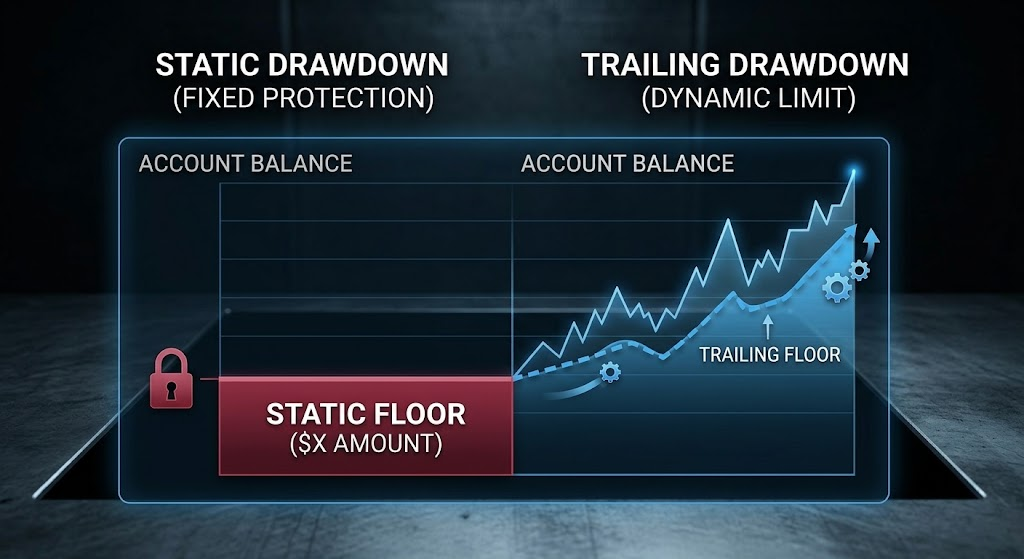
Drawdown rules are designed to protect your account and keep your risk under control. These limits define the maximum amount your account balance can drop before the account closes.
- Daily Loss Limit: FXIFY applies a daily loss limit, such as 4% on Two Phase programmes. This limit is calculated from the account balance or equity recorded at 5 PM EST on the previous trading day. If equity or balance drops below this threshold during the day, a rule breach occurs.
- Maximum Static Drawdown: Under static drawdown models, your maximum loss threshold stays at a fixed dollar amount based on your initial balance. For example, on a $100,000 account with a static drawdown limit, your maximum loss floor remains fixed regardless of account growth.
- Maximum Trailing Drawdown: Under trailing drawdown models, such as the Lightning Challenge, the maximum drawdown threshold trails your highest closed trading balance, not live equity, so an open position doesn’t move the floor until it’s actually closed. As your closed balance reaches new highs, the drawdown floor moves up with it, until your profit reaches the account’s drawdown percentage. At that point, the floor stops trailing and locks permanently at your starting balance.
- Consistency Over Speed
Building a steady income takes time, so there is no reason to rush. High speed and heavy risk often lead to broken account rules. When you focus on steady execution over many months, you give yourself the best chance to build lasting trading habits.
How a Funded Account Pays You
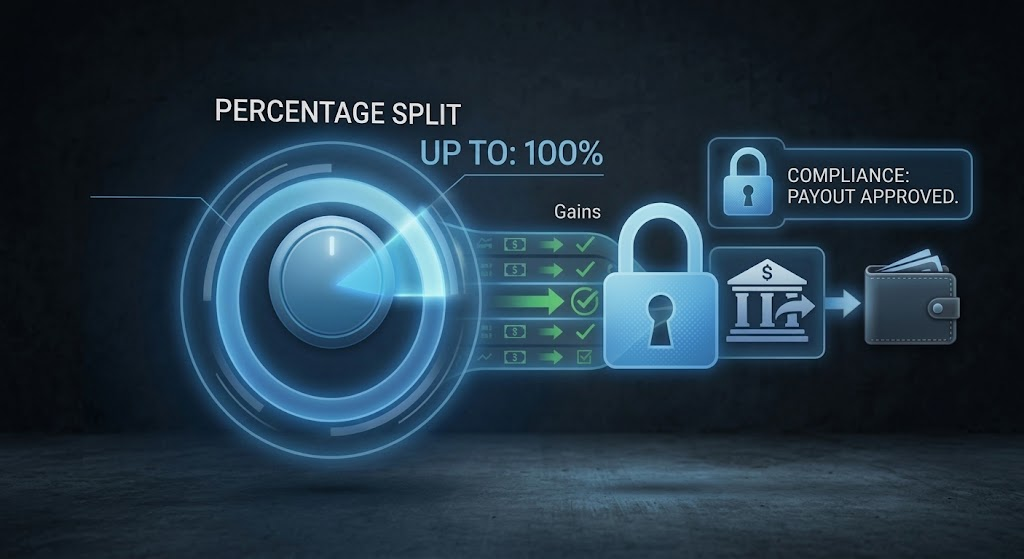
A funded account does not pay a regular salary. Instead, you receive a share of the trading gains you have earned, called a performance split.
Performance Split Structure
A performance split is the portion of net trading gains that you keep. The firm retains the remaining percentage. FXIFY offers performance splits that vary by programme. Two Phase programmes offer performance splits up to 100% depending on account scaling and options. Instant Funding programmes offer standard performance splits up to 90%.
Payout Schedules and Rule Compliance
Payouts are processed according to the rules of your chosen programme. FXIFY provides flexible options, including standard payout schedules every 14 days or every 30 days. Certain evaluation programmes also offer a First Payout On Demand option after you complete the initial required trading conditions on your funded account.
To request a payout, your account must meet key criteria:
- Complete the minimum required trading days for your account type.
- Keep your closed account balance above your starting balance.
- Stay within all daily and maximum drawdown limits at all times.
Withdrawing net gains reduces your total account balance. On trailing drawdown accounts, a profit withdrawal brings your remaining balance closer to the maximum trailing drawdown floor. Traders must adjust their position sizes after receiving a payout to maintain an adequate safety buffer.
The Realistic Picture
Traders should not assume that funded trading will become a full-time income. Markets move up and down, and losing trades are a normal part of the process. A funded account provides capital, but it does not remove market risk. Without strict risk habits, losses can add up quickly and end your trading account.
Income from funded trading varies from month to month. You may experience periods with consistent payouts followed by periods with zero payouts. Evaluating a funded account requires acknowledging that gains are not guaranteed or predictable.
What This Means If You Are Starting Out
Starting your funded trading journey can be exciting if you take things step by step. You do not need to figure everything out on day one.
- Review programme models: Compare different account options, drawdown types, and performance split structures on the FXIFY evaluation programmes page.
- Calculate risk before trading: Always verify your maximum daily loss limit and maximum drawdown floor before opening a position.
- Track your daily progress: Keep a log of your trades to see how your gains and losses behave over time.
- Understand payout impacts: Account for how withdrawals affect your available drawdown buffer on trailing account models.
- Give yourself time to learn: Take pressure off yourself by setting realistic targets and focusing on clean execution.
Funded trading can support your financial goals, but it requires patience and steady risk management. You don’t need to hurry or take unnecessary risks to build results. By protecting your capital, following drawdown rules, and keeping realistic expectations, you build the best foundation for long-term growth.