


10 Movies for Traders: Real Lessons in Risk, Psychology, and Market Failure
Most lists of movies for traders treat the films as entertainment. This guide treats them as case studies. Each film here shows real financial behaviour:…
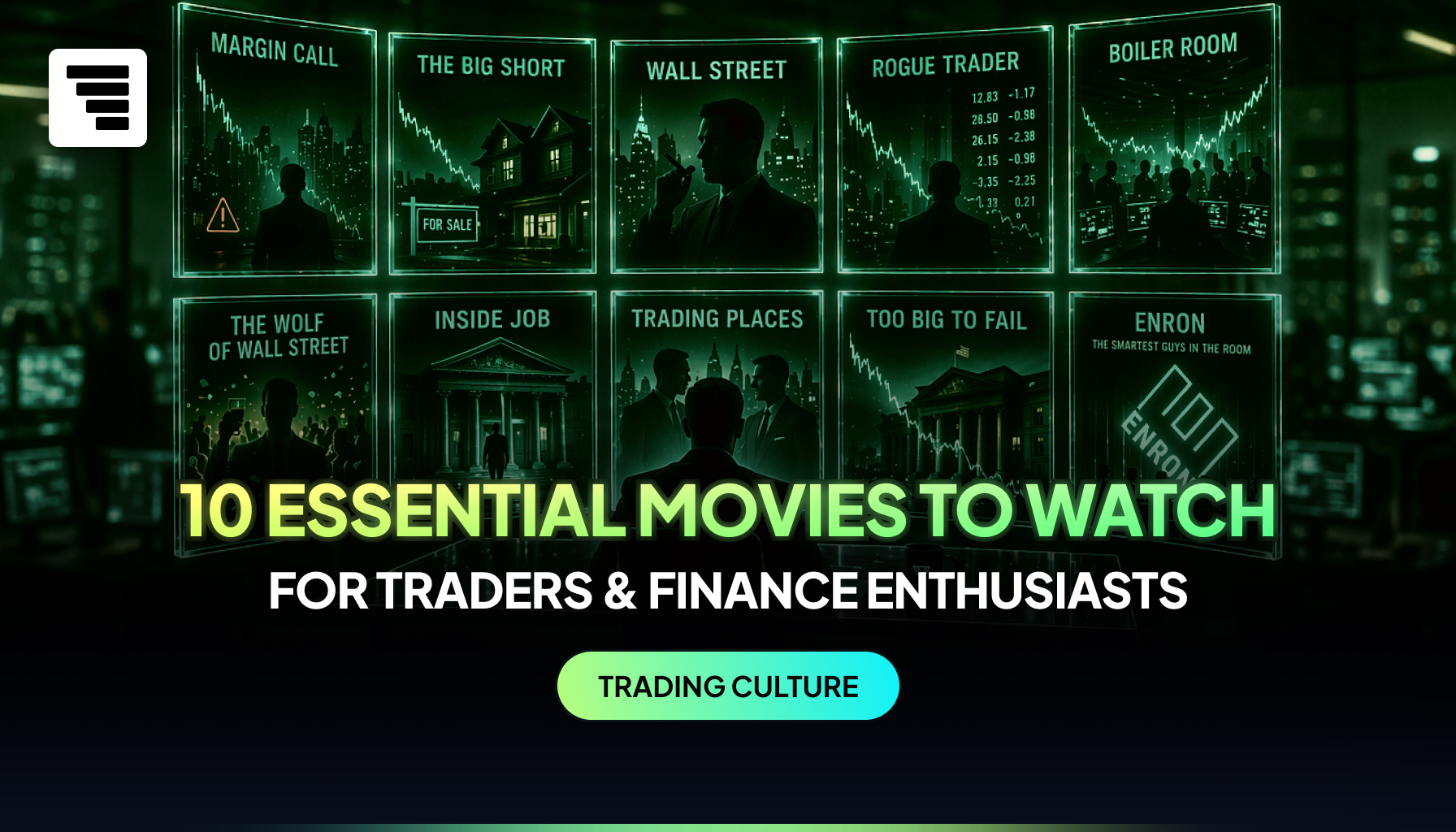
Most lists of movies for traders treat the films as entertainment. This guide treats them as case studies.
Each film here shows real financial behaviour: fraud, leverage misuse, market failure, and trader psychology breaking down. These are not made-up stories. They are reconstructions of events that moved real markets and destroyed real capital.
By the end of this article, you will understand how greed, risk miscalculation, and behavioural bias show up in markets. More importantly, you will know how to spot the same patterns in your own trading.
What’s in This Guide
- Why finance films still matter for traders
- The 10 films, with the specific lessons
- The four failure patterns that show up in everyone
- What traders should actually take from these films
- FAQs
Why Movies About Markets Still Matter for Traders
Markets are driven by human behaviour. Films compress that behaviour into clear, watchable sequences.
A chart cannot show you why a trader held a losing position for three months. A film can. It can show the internal justification, the institutional pressure, and the psychological decline that lead to a catastrophic loss.
Finance films, especially those based on real events, show the decision-making environment behind the outcome. Every big market failure in the last 40 years has shared the same patterns:
- Leverage without limits
- Incentive structures that reward short-term risk-taking
- No hard stop on losses
You do not need a finance degree to understand these patterns. You just need to watch how professionals, with all their resources and information, still make the same costly mistakes.
The films below are chosen because each one clearly shows a specific concept. They are analytical tools, not just viewing recommendations.
10 Movies for Traders, With Lessons
1. Margin Call (2011)
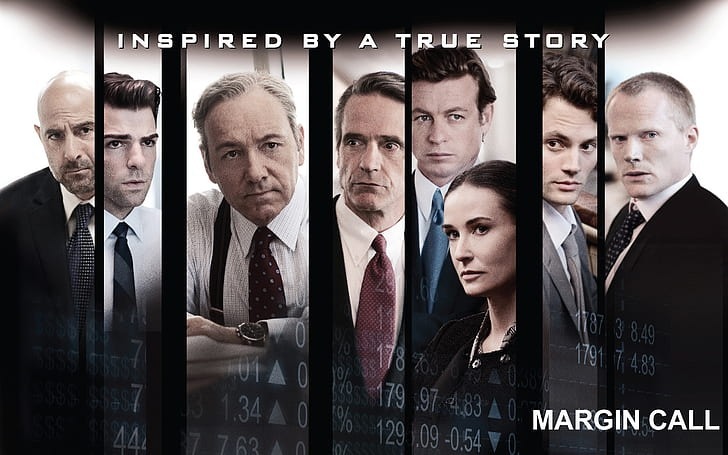
A fictional investment bank discovers its risk models are badly wrong. The firm faces total collapse within hours.
What the film shows: Senior management has to decide whether to dump toxic assets before the market opens, knowing it will destroy client portfolios.
The trading lesson: What happens when position sizing goes beyond the firm’s real risk capacity. The bank held leveraged positions far bigger than it could absorb in losses. When volatility went outside the modelled range, the entire book became impossible to unwind without crashing the market.
Why it matters in real trading: Traders often underestimate tail risk. A position that looks fine in normal conditions can become a disaster in thin markets. Models built on historical volatility break when conditions shift. The lesson is not that models are useless. It is that they need to be tested against scenarios beyond what they were built for. Every trader should know the maximum drawdown their account can take before a position becomes unmanageable.
2. The Big Short (2015)
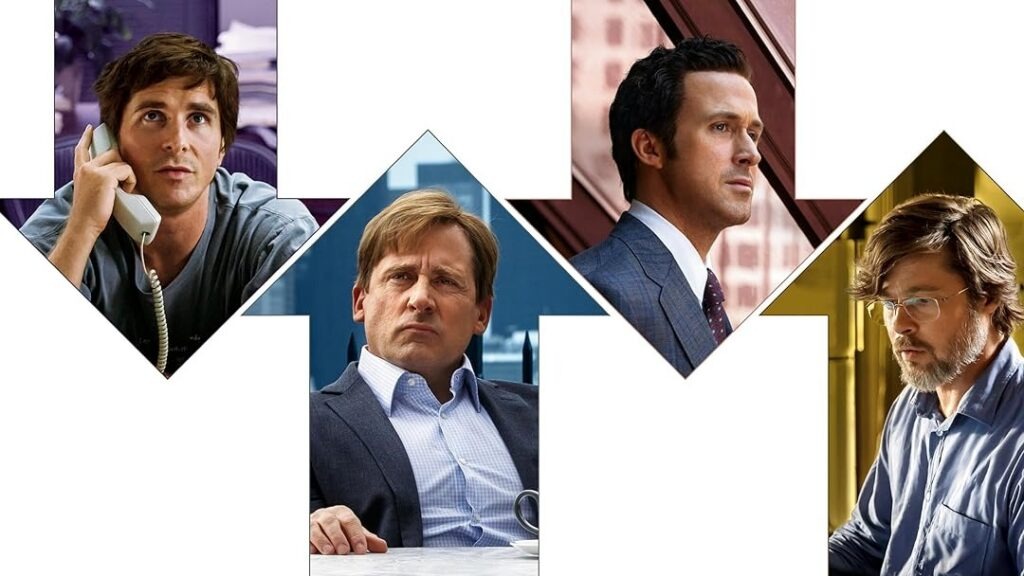
A small group of traders identifies the 2008 housing bubble before the rest of the market accepts it. They short mortgage-backed securities.
What the film shows: How behavioural bias, specifically the “everyone is doing it” trap, kept institutions from acting on a visible systemic risk.
The trading lesson: The traders who profited were not smarter in raw intelligence. They were willing to act against the consensus when the data backed it. Most market participants anchored to recent price history and assumed it would continue. That is recency bias at a systemic level.
Why it matters in real trading: Retail traders fall into the same trap. When a market has trended for months, it feels permanent. Position sizes grow. Stop losses widen. The trader gets exposed to a mean-reversion event they did not plan for. The film shows that bubbles last longer than rational analysis predicts. That means timing matters as much as the thesis itself. Being early is often the same as being wrong.
3. Wall Street (1987)
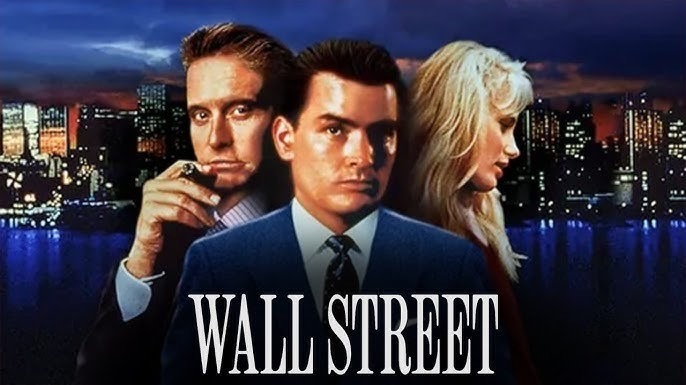
A young broker seeks mentorship from a powerful trader who operates on insider information. The pursuit of status drives reckless decisions.
What the film shows: How greed distorts decision-making. Gordon Gekko does not take risks because opportunities are exceptional. He takes risks because winning itself becomes the goal.
The trading lesson: When profit becomes about ego rather than process, risk management falls apart. Position sizes grow beyond the plan. Trades get held past logical exit points. Losses do not get cut because cutting means admitting the decision was wrong.
Why it matters in real trading: Overtrading and revenge trading share the same root cause. A trader measuring self-worth against account performance will distort every risk decision. The practical outcome is messy position sizing and an inability to follow predefined exit rules. Discipline means separating identity from outcome.
4. Rogue Trader (1999)
Based on the true story of Nick Leeson, whose unauthorised futures trading caused the collapse of Barings Bank in 1995.
What the film shows: Leeson’s trading started as an attempt to cover small errors. Each new trade was sized to recover previous losses in a compounding cycle.
The trading lesson: A clinical case study in martingale thinking. Doubling down to recover losses is not a strategy. It is the absence of risk management. Account exposure grew exponentially while the probability of recovery dropped. Leeson had no pre-defined maximum loss and no external accountability.
Why it matters in real trading: Loss aversion combined with unrestricted leverage is lethal. The film shows exactly how a trader can convince themselves that one more trade will fix everything. Every prop trader and funded account holder feels this pressure after a drawdown. The only defence is a hard maximum loss rule that cannot be talked away. Without it, the psychology shown in this film will appear.
5. Boiler Room (2000)
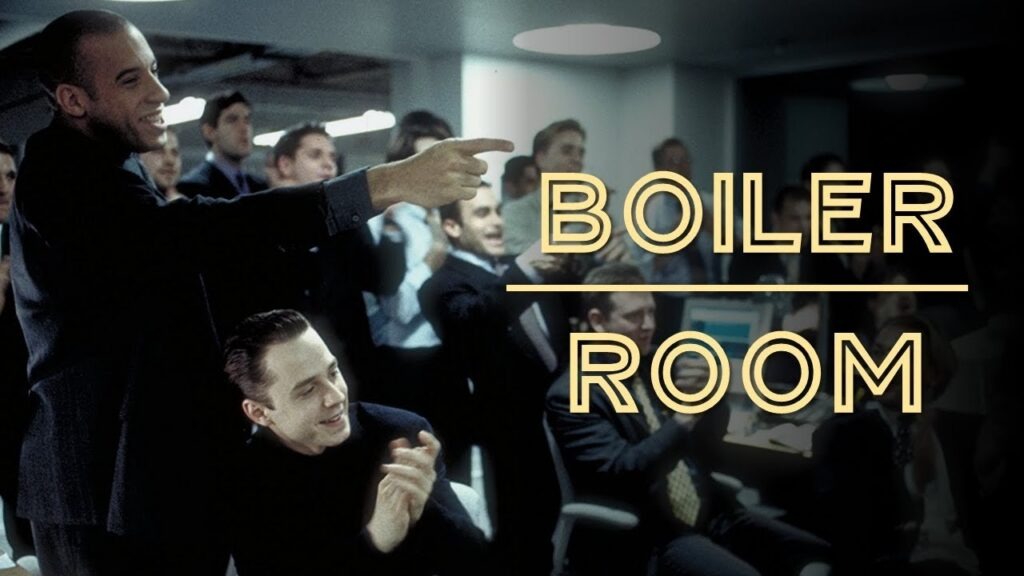
A young man joins a brokerage that sells penny stocks using high-pressure tactics. The firm is running a pump-and-dump.
What the film shows: How retail investors get targeted using urgency, exclusivity, and social proof, all built to bypass rational decision-making.
The trading lesson: Retail traders are the exit liquidity in pump-and-dump schemes. Informed players accumulate at low prices. Retail buyers are drawn in by a manufactured story. The informed players sell into retail demand and walk away. Retail is left holding the falling asset.
Why it matters in real trading: Understanding this protects traders from two risks. First, being the uninformed buyer in a manipulated market. Second, misreading volume and price action in thin instruments. Volume spikes and aggressive upward moves in illiquid markets should raise scepticism, not FOMO.
6. The Wolf of Wall Street (2013)
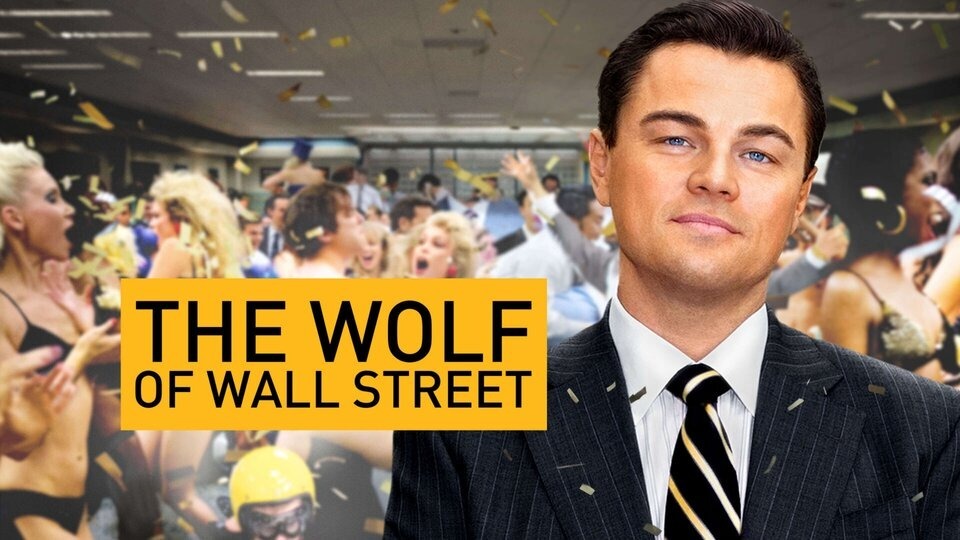
Based on Jordan Belfort’s memoir. A broker builds a firm that defrauds clients through manipulated stock sales and an aggressive sales culture.
What the film shows: How short-term incentive structures corrupt risk assessment. Everyone was rewarded for volume and revenue, not for client outcomes.
The trading lesson: When the feedback loop between action and consequence is broken, behaviour becomes pure incentive chasing. Brokers were not assessing trade quality. They were running volume. This applies to traders who chase activity, overtrade funded accounts, or take positions because doing something feels like progress.
Why it matters in real trading: Overtrading is one of the most consistent causes of funded account failure. The pattern in this film, where activity replaces discipline, maps directly to traders who take low-quality setups just to stay engaged. More trades do not mean more edge. Cutting trade frequency to only high-conviction setups improves expectancy.
7. Inside Job (2010)
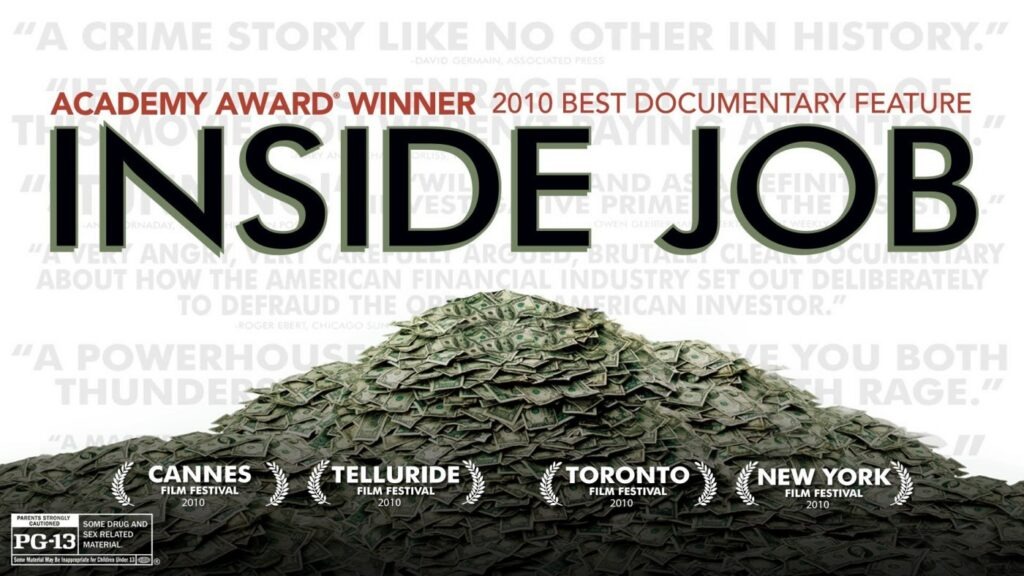
A documentary on the structural causes of the 2008 financial crisis. It focuses on conflicts of interest across institutions, regulators, and academics.
What the film shows: How institutional behaviour differs from retail expectations. Institutions were packaging and selling assets they privately classified as worthless.
The trading lesson: The information gap between institutional and retail participants is structural, not accidental. Retail traders often assume the price reflects all available information. The 2008 crisis proved that price can reflect institutional distribution rather than fair value.
Why it matters in real trading: Traders need to understand the difference between price and value at the institutional level. When large institutions are net sellers, retail buyers absorb the supply. Knowing who is likely on the other side of a trade matters. Assuming the market is neutral is a costly mistake.
8. Trading Places (1983)

Two wealthy brothers run a social experiment. They put a street con artist in a senior trading role and strip a successful broker of his.
What the film shows: Even with a comedic framing, it presents real concepts: futures market mechanics and price manipulation through information control.
The trading lesson: The climax involves cornering the frozen orange juice futures market using stolen crop data. That is a direct depiction of how information advantage becomes trading edge, and how manufactured information moves markets ahead of price discovery.
Why it matters in real trading: Information timing is a real market dynamic. Data moves prices before most retail participants can react. Traders who understand how catalysts interact with positioning, especially in commodity and futures markets, build better entry and exit timing. The film also shows how thin futures markets can be moved by concentrated orders, a real risk in low-liquidity instruments.
9. Too Big to Fail (2011)
A dramatization of the 2008 crisis negotiations between the US Treasury, the Federal Reserve, and major banks.
What the film shows: Systemic contagion. How interconnected balance sheets mean one institution’s failure cascades through the entire financial system.
The trading lesson: Systemic risk is invisible during expansion. Correlations between assets rise sharply during crises. A trader holding a diversified portfolio discovers, during a crash, that correlations approach 1.0 and diversification provides no protection.
Why it matters in real trading: During market stress, normal assumptions about uncorrelated positions break down. Traders relying on diversification as a risk-management tool need to understand that systemic events can undermine portfolio protection at the worst possible moment. Position sizing in high-uncertainty macro environments should account for everything moving in the same direction.
10. Enron: The Smartest Guys in the Room (2005)

A documentary covering the collapse of Enron. Executives engaged in accounting fraud and market manipulation to maintain the false appearance of profitability.
What the film shows: How narrative can sustain a price disconnected from fundamental reality, and how long that disconnect can last before collapsing.
The trading lesson: Enron’s stock was buoyed by analyst consensus, the media narrative, and institutional positioning, none of which reflected its actual financial condition. Traders shorting the stock faced prolonged pain before the collapse. It is a case study in the costs of being early versus ignoring evidence.
Why it matters in real trading: Fundamental disconnects can persist for years. Traders building thesis-driven positions against strong narrative momentum need to manage size carefully. The risk is not that the thesis is wrong. It is that the market does not correct on the trader’s timeline. Sizing must account for the possibility of being correct but losing capital before the thesis resolves.
Four Failure Patterns Across Every Film
10 films. 10 different markets, time periods, and characters. The same four failures show up in every one.
Leverage used beyond recovery capacity. Every collapse on this list involved positions that could not be unwound without disaster. Barings, Enron, and the 2008 crisis all share this.
Risk limits are absent or ignored. Risk controls existed in most of these cases. They were overridden, ignored, or never enforced. A control is only as effective as the commitment to apply it.
Incentive structures that reward the wrong behaviour. The Wolf of Wall Street, Boiler Room, and Inside Job all show how fees and commissions drive behaviour that conflicts with sound risk management.
Narrative replacing data. Enron and The Big Short both show markets priced on story rather than fundamentals. The story holds until it cannot, and the correction is violent.
What Traders Should Actually Take From These Films
Films are not trading courses. They do not teach entries, exits, or setups. What they teach is the environment in which decisions are made and how that environment corrupts decision-making.
Define your maximum loss before entering. Every catastrophic loss in these films began as a manageable drawdown. The trader did not have a pre-committed exit. Nick Leeson is the clearest example. A hard daily and weekly loss limit removes the decision from the heat of the moment.
Size positions based on risk, not conviction. High conviction does not reduce risk. It amplifies exposure to being wrong. The traders in The Big Short sized positions correctly yet still faced years of drawdowns before the thesis paid off.
Understand who is on the other side. Boiler Room and Inside Job both show that price is not neutral. It reflects the behaviour of informed participants. Retail traders consistently underestimate institutional order flow.
Separate identity from outcome. Wall Street and The Wolf of Wall Street both show traders whose identity became fused with their results. That creates an inability to cut losses, because cutting means admitting failure. Treat each trade as a single data point within a larger process.
How FXIFY Builds Discipline Into the Structure
The structural lessons across these films map directly onto how funded prop trading works. The right structure protects traders from the same psychological traps that led to the downfall of Nick Leeson and the firms in Margin Call.
- Hard drawdown limits at the program level (no rationalising past them)
- Defined evaluation rules that enforce discipline before live capital
- Personal exposure capped at the evaluation fee (not at the full account)
For more on how the structure works, see How It Works. For specific programs designed around different risk styles, see Two Phase and Instant Funding.
FAQs
What are the best movies for traders?
Margin Call, The Big Short, and Rogue Trader give the most direct lessons in risk management and trading psychology. Each is based on real events and shows failure in specific, useful ways.
Are trading movies realistic?
Films based on documented events, like Rogue Trader, Inside Job, and Enron: The Smartest Guys in the Room, are highly accurate in their depiction of decision-making and market dynamics. Dramatised films like Wall Street compress timelines but reflect real behavioural patterns.
Can movies actually teach trading?
Not entries, exits, or strategy. What they teach is the psychological and structural environment in which decisions break down. That context is valuable. Understanding why professionals fail helps you spot the same tendencies in yourself.
Which movie best shows the mechanics of real trading?
Margin Call is the most technically accurate depiction of an institutional risk-management failure. Trading Places, despite the comedy, accurately shows futures market mechanics and the information-based trading edge.
What can traders learn from finance films about risk management?
Every major loss in these films shares the same structure: no pre-defined maximum loss, leverage beyond recovery capacity, and a decision to hold rather than cut. The practical lesson is that risk management rules must be in place before entering a position, not during a drawdown.
Do these films apply to retail traders or only institutional traders?
Both. Retail traders face identical psychological pressures: loss aversion, overconfidence, and revenge trading. The scale is different. The behaviour is not. Rogue Trader and Wall Street are particularly relevant to anyone trading with a defined capital limit.
Bottom Line
The best movies for traders are not instruction manuals. They are studies of human behaviour.
Each film here isolates one failure mode: leverage without limits, greed overriding process, narrative replacing data, and incentive structures corrupting decisions. These are not historical curiosities. They are recurring patterns in every market cycle.
Study these films analytically. Extract the decision point. Identify the error. Then build a rule to prevent it in your own trading.
Risk Disclaimer
Trading foreign exchange, CFDs, and other leveraged products carries a high level of risk and may not be suitable for all investors. You may lose some or all of your initial capital. Past performance is not indicative of future results.
The information in this article is for educational purposes only and does not constitute financial advice. Always consult a qualified financial professional before making any trading decisions.