

Weekly Market Preview: What’s Moving the Markets This Week (20–24 July)
Five high-impact releases land across five currencies this week. Three consecutive inflation prints — Canada, New Zealand, and the UK — hit the tape before…

Five high-impact releases land across five currencies this week. Three consecutive inflation prints — Canada, New Zealand, and the UK — hit the tape before the European Central Bank delivers its Main Refinancing Rate decision on Thursday. Australia’s jobs report lands the same morning as the ECB.
Wednesday and Thursday carry the heaviest concentration of event risk. Price action across GBP, AUD, and EUR pairs could be volatile on both days.
Here is the full breakdown.
Sunday, 20 July — Canada Consumer Price Index (CAD) | 12:30 PM GMT

Canada’s headline inflation track. Coming directly on the heels of the Bank of Canada’s July 15 rate decision, this single number will either vindicate the BoC’s current policy path or add pressure to reconsider it.
May CPI came in at 3.2% year-on-year, the highest reading since December 2023, driven by a 33.2% surge in gasoline prices linked to the Middle East conflict. However, the BoC’s preferred core measures remained anchored, with CPI-Trim at 2.0% and CPI-Median at 2.1% for a second consecutive month.
For the June reading, Continuum Economics expects headline CPI to correct lower to 3.0% year-on-year, from 3.2% in May, with the month-on-month reading falling 0.2%. The primary driver of the pullback is a significant correction in gasoline prices following the easing of Middle East supply tensions in June. Core measures are expected to remain largely stable, with CPI-Median forecast at 2.1% and CPI-Trim at 2.0% for a third straight month. Excluding food and energy, prices are forecast to rise 0.3% month-on-month, picking up from four consecutive months of 0.1% gains.
The core picture will matter more than the headline this week. If the BoC’s preferred measures hold steady while headline CPI cools, it supports the case for a continued hold through summer.
What traders are watching:
Higher than expected — Bullish CAD. Indicates price pressures are rebounding. Reduces the case for near-term BoC easing and supports the Loonie.
Lower than expected — Bearish CAD. Confirms inflation is returning toward target, adding pressure on the Loonie as rate cut expectations build.
Monday, 20 July — New Zealand Consumer Price Index (NZD) | 10:45 PM GMT
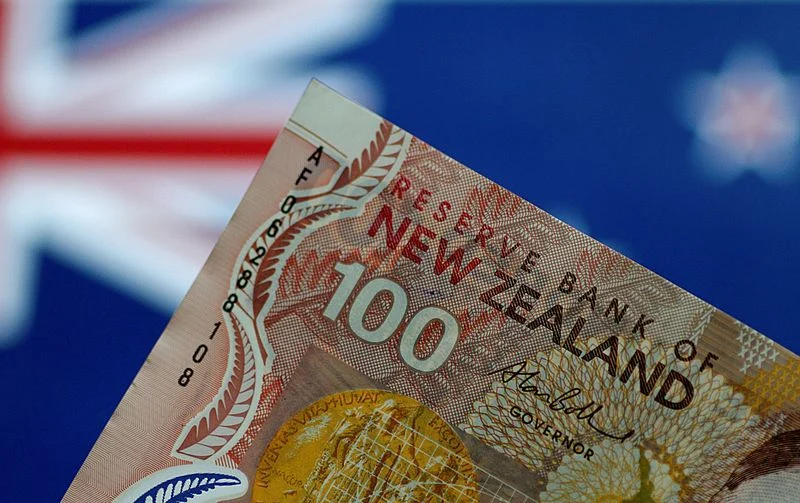
This is the high-impact quarterly inflation report card for New Zealand. Coming two weeks after the RBNZ’s July 8 rate decision, this data will show whether the central bank’s policy stance is working or whether inflation is accelerating beyond its projections.
New Zealand’s Q1 2026 CPI came in at 3.1% year-on-year, hitting the upper limit of the RBNZ’s 1–3% target band. For Q2 2026, Westpac and ActionForex both forecast a 1.5% quarterly rise, which would take the annual rate to 4.1%, the highest in two years and above the RBNZ’s own projection of 3.9%. The primary driver is fuel costs. Petrol prices rose approximately 20% over the June quarter, and diesel prices surged around 51%, together accounting for a significant share of the CPI basket. Household energy costs also rose sharply, with electricity prices up around 4% over the quarter and 12% over the past year.
Core inflation measures are softening but remain above the RBNZ’s 2% midpoint target. The RBNZ held rates at 2.25% at its July 8 meeting after a 3-3 vote split forced Governor Anna Breman to cast the deciding vote to hold. A Q2 CPI print near or above 4% would significantly increase the probability of a rate hike at the August meeting.
What traders are watching:
Higher than expected — Bullish NZD. Inflation remaining sticky forces expectations for higher-for-longer rates. Increases the probability of an RBNZ hike.
Lower than expected — Bearish NZD. Proves the economy is cooling, clearing the way for the RBNZ to remain on hold or consider future cuts. NZD weakens.
Tuesday, 22 July — UK Consumer Price Index (GBP) | 6:00 AM GMT

The most closely watched inflation report for the British Pound. UK CPI dictates the Bank of England’s entire monetary policy approach. Any significant deviation from expectations will trigger sharp moves in GBP pairs.
UK CPI held at 2.8% in May 2026, unchanged from April and below market expectations of 3.0%. At its June meeting, the BoE held rates at 3.75% with the MPC voting 7-2 to maintain, with two members pushing for a hike to 4.0%. Core CPI came in at 2.6% in May, up from 2.5% in April. Services inflation accelerated to 3.7%, up from 3.2% in April.
The BoE’s June guidance projected CPI to rise to just under 3% in Q3 2026 and pick up to just over 3.25% in Q4, driven by the July energy price cap increase of £221, or 13.5%, to £1,862. Tuesday’s June CPI reading is the last major inflation data point the MPC will see before the August 6 rate decision. The two members who voted to hike in June will be watching this closely. A print above 3% would significantly strengthen their case.
What traders are watching:
Higher than expected — Bullish GBP. Keeps pressure on the BoE to maintain or raise interest rates, lifting the Pound.
Lower than expected — Bearish GBP. Reduces the urgency for further tightening. Weakens the Pound as rate relief expectations build.
Wednesday, 23 July — Australia Unemployment Rate and Employment Change (AUD) | 1:30 AM GMT

The primary jobs report for Australia. The labour market has been a key variable in the RBA’s rate deliberations. The RBA has delivered three consecutive rate hikes this year, bringing the cash rate to 4.35%, and the jobs data will shape whether a fourth hike at the August meeting is possible.
May’s labour force report showed the unemployment rate at 4.4%, above the RBA’s latest forecast. Employment fell by 18,600 in April, the first monthly decline in five months, against expectations of a 17,500 increase. NAB’s latest business survey showed employment growth slowing sharply. CBA is forecasting the unemployment rate to rise to 4.8% by Q4 2027, citing higher interest rates and a cooling housing market weighing on hiring. The RBA’s own May Statement on Monetary Policy forecast that the unemployment rate would rise to 4.7% by mid-2028.
A weak result on Thursday would put the RBA in a difficult position. Core inflation remains above target, but a deteriorating labour market would make it harder to justify another hike in August.
What traders are watching:
Low unemployment — Bullish AUD. Demonstrates a resilient labour market capable of sustaining higher rate paths. Increases the case for an August RBA hike.
High unemployment — Bearish AUD. Highlights emerging cracks in the economy. Reduces the probability of further RBA tightening and weighs on the Aussie.
Wednesday, 23 July — ECB Main Refinancing Rate (EUR) | 12:15 PM GMT

The major event of the week is for the EUR pairs. The European Central Bank Governing Council announces its rate decision at 13:45 CET, with President Christine Lagarde’s press conference following at 14:30 CET.
At its June 11 meeting, the ECB raised all three key rates by 25 basis points, its first hike since 2023, bringing the deposit facility rate to 2.25%, the main refinancing rate to 2.40%, and the marginal lending facility rate to 2.65%. The ECB cited energy price pressures from the Middle East conflict and revised its 2026 inflation forecast up to 2.6%. Meeting accounts published on July 9 described the June hike as “robust across a wide range of scenarios.”
July is a non-projection meeting. There are no fresh staff macroeconomic forecasts. That places the full signaling burden on the policy statement, the vote split, and Lagarde’s press conference Q&A. The ECB has explicitly agreed to avoid providing guidance on the future rate path, with officials stressing a data-dependent, meeting-by-meeting approach. Markets are currently pricing a hold at July, with at least one additional hike expected later in the year if energy prices remain elevated.
What traders are watching:
Rate hike — Bullish EUR. A second consecutive hike would strengthen the Euro as yield spreads widen against global peers.
Hold with hawkish statement — Mixed EUR. No move, but the statement signals further tightening is possible. EUR supported, but response likely limited given partial market pricing.
Hold with soft guidance — Bearish EUR. If Lagarde signals the June hike may be sufficient, traders position for lower monetary yields and the Euro sells off.
Calendar Snapshot
| Date | Event | Currency | Time (GMT) |
|---|---|---|---|
| Sun 20 Jul | Consumer Price Index | CAD | 12:30 PM |
| Mon 20 Jul | Consumer Price Index (Q2) | NZD | 10:45 PM |
| Tue 22 Jul | Consumer Price Index | GBP | 6:00 AM |
| Wed 23 Jul | Employment Change and Unemployment Rate | AUD | 1:30 AM |
| Wed 23 Jul | Main Refinancing Rate | EUR | 12:15 PM |
A Quick Note on Risk
Economic data releases can cause sharp, fast moves in the market. Price can spike in both directions before settling. This week brings back-to-back high-impact events across Wednesday and Thursday, covering five currencies. Make sure you understand how your FXIFY account drawdown rules work before you trade around major news events. For more on how funded traders approach volatile sessions, see our guides on trading styles for funded traders and how news events affect prop traders.