Page background

Forex vs Futures: Which One Is Better for Your Trading Style?

Choosing between Forex and Futures isn’t just about preference—it defines your trading edge. Each market offers distinct advantages in structure, execution, and scalability. But which one aligns best with the way you trade?

If you want access to a wide range of currency pairs and the ability to start trading with smaller capital, Forex makes it easier to get started and stay flexible as you grow. If you’d rather trade on a central exchange with standardized pricing, Futures might be a better fit. Both have real strengths—it’s just about which one matches how you like to trade.

Your market choice shapes your edge—because trading success begins with the structure you operate within.

Forex vs Futures at FXIFY

FXIFY gives traders access to both Forex and Futures markets through its partnership with FXPIG, a trusted broker with 20+ years of experience.

  • Forex: Decentralised trading, micro lot sizing, 24/5 access, flexible capital.
  • Futures: Centralised exchanges (like CME), standardised pricing, regulated conditions, clear execution.

Whether you’re scalping currencies or trading index futures, FXIFY lets you choose the market that matches your goals.

Core Differences at a Glance

FeatureForexFutures
Market StructureDecentralised (OTC)Centralised (Exchange-traded)
PricingBroker-defined, variableTransparent, Standardised
ExecutionBroker-dependentCentral order book
RegulationVaries by jurisdictionStrictly regulated
Contract TermsFlexibleFixed, standardised
Risk ModelBroker (counterparty)Clearinghouse

Market Size Snapshot

  • Forex: ~$7.5 trillion daily volume (BIS, 2022)
  • Futures: ~$500 billion daily volume (FIA, 2023)

FXIFY is one of the few prop firms offering access to both trading models. You can choose between phased Forex evaluations or direct access to regulated markets with Futures funding.

Execution & Transparency

  • Forex: Broker practices vary. Some widen spreads or operate as market makers, leading to inconsistent execution—especially during volatile sessions.
  • Futures: Same prices, same data for all participants. Trades are matched on a central exchange with full visibility.

FXIFY traders benefit from:

  • Forex: STP execution, tight spreads, micro lots
  • Futures: Free Level 1 data, consistent fills, institutional-grade access

Risk and Regulation

Futures are traded through tightly regulated exchanges, offering built-in protections like central clearing and transparent settlement. This reduces counterparty risk and enhances price integrity–key pillars for any serious trader.

Forex, while more flexible and accessible, operates within a decentralised framework that varies widely in regulation. This can lead to inconsistencies in oversight, pricing, and client protection.

FXIFY bridges that gap with a professional-grade in-house dashboard, empowering traders to monitor performance, exposure, and consistency in real-time. It’s risk management by design–not reaction.

Leverage Comparison

  • Forex: Fixed leverage (30:1 to 500:1) based on jurisdiction. Higher leverage often means lower protections.
  • Futures: Margin-based leverage set by the exchange. It adjusts dynamically with asset volatility.

Futures deliver scalable leverage built for consistency and long-term strategy. Forex provides faster access to leverage for smaller accounts.

The Bottom Line

Choose FXIFY CFD if:

  • You trade with smaller capital
  • You like micro sizing 
  • You prefer trading forex currencies 

Choose FXIFY Futures if:

  • You want consistent pricing and execution
  • You trade indices or commodities
  • You prefer transparent, regulated conditions

No matter your capital—$5K or $400K—FXIFY delivers the tools and tech to help you trade like a professional.

The Best Films About Trading: 10 Must-Watch Movies for Every Trader

Trading isn’t just about charts and numbers. It’s about ambition, high-stakes risks, and split-second decisions. It’s no wonder Hollywood has been drawn to the world of finance, placing the trading floor as a backdrop for compelling and insightful stories.

From meteoric rises to catastrophic falls, these films capture the thrill and chaos of trading like nothing else. But they’re not just entertaining—they’re packed with lessons on psychology, risk management, and the realities of market life. 

Whether you’re just starting your trading journey or deep into the game, these ten films are essential viewing.

10. The Hummingbird Project (2018)

This thriller follows two cousins racing to build a fibre-optic line that gives them a millisecond trading advantage.

Starring Jesse Eisenberg and Alexander Skarsgård, the film explores the lengths traders will go to gain an edge. While not a major box office hit, it offers a unique look at the obsession with speed in modern finance.

9. Trading Places (1983)

A classic comedy where a wealthy investor and a street hustler switch lives, leading to a showdown in the commodities market. Starring Eddie Murphy and Dan Aykroyd, the film was a critical and commercial success, earning several award nominations. 

Fun fact: it led to real-world changes in commodities trading regulations known as the “Eddie Murphy Rule.” This rule, introduced by the U.S. Commodity Futures Trading Commission (CFTC) in the 1980s, prevents traders from exploiting non-public, government-sourced information to gain unfair advantages in commodities markets.

8. Dumb Money (2023)

The true story of the GameStop short squeeze, where retail traders took on Wall Street hedge funds. Featuring Paul Dano and Seth Rogen, it captures the power of collective action in the markets. Although relatively recent, it has been praised for making a complex financial event accessible to a broad audience.

7. Rogue Trader (1999)

The cautionary tale of Nick Leeson, whose unauthorised trades caused the collapse of Barings Bank. Starring Ewan McGregor, the film didn’t perform strongly at the box office but has become a cult classic for traders and finance professionals. It offers a sobering lesson on the consequences of poor oversight.

6. Inside Job (2010)

An Oscar-winning documentary breaking down the 2008 financial crisis and exposing the systemic greed and failure that fueled it. 

Narrated by Matt Damon, it received widespread critical acclaim and remains one of the most accessible explanations of the financial meltdown.

5. Boiler Room (2000)

A college dropout gets pulled into a high-pressure brokerage firm selling dodgy stocks. Starring Giovanni Ribisi, Vin Diesel, and Ben Affleck, the film offers a raw look at sales-driven financial scams. It earned praise for its intense atmosphere and is loosely inspired by the real-life Stratton Oakmont brokerage. 

Traders will find it thrilling to see sales psychology, manipulative tactics, and pump-and-dump schemes in action—and get a sharp reminder to always know who’s on the other side of a trade.

4. The Wolf of Wall Street (2013)

The outrageous true story of Jordan Belfort’s rise and fall in the world of penny stocks and financial fraud. Directed by Martin Scorsese and starring Leonardo DiCaprio, it was a major success, earning five Oscar nominations. Notably, much of the script was based directly on Belfort’s memoirs.

3. Margin Call (2011)

A gripping drama set during the first hours of the 2008 financial collapse. Starring Kevin Spacey, Jeremy Irons, and Zachary Quinto, the film was nominated for an Academy Award for Best Original Screenplay. It was praised for its realistic depiction of the financial industry’s ethical grey areas. 

Traders will get a chilling view into how risk models fail, panic decisions are made, and how entire institutions can unravel overnight—lessons in both market fragility and crisis psychology.

2. The Big Short (2015)

This brilliant film dissects the housing bubble and subprime mortgage meltdown. Directed by Adam McKay and featuring an ensemble cast including Christian Bale, Steve Carell, and Ryan Gosling, it won the Oscar for Best Adapted Screenplay. 

It is notable for its innovative use of celebrity cameos to explain complex financial concepts. It’s an incredible deep dive into how to spot systemic risk, think independently, and why betting against the crowd can sometimes lead to the biggest wins.

1. Wall Street (1987)

The defining film about corporate greed and insider trading, featuring the legendary Gordon Gekko. Starring Michael Douglas, who won an Oscar for his role, the film became an iconic portrayal of 1980s financial culture. “Greed is good” remains one of the most quoted lines in movie history.

Final Take: Trading Lessons from the Big Screen

These films show many sides of the trading world—from funny and exciting stories to serious lessons about mistakes and risks. Even though they are made for entertainment, they highlight real truths about trading: the importance of managing risk, staying ethical, and understanding human behaviour. 

Each movie gives traders something valuable to think about, whether it’s how greed can destroy success or how quick thinking can open big opportunities. 

Watching these films is not just enjoyable—it can also help you become a smarter and better trader.

Pro Trader’s Secret: Why Journaling Gives You the Real Edge

In a market obsessed with indicators, automation, and strategy stacking, the most transformative tool often gets ignored: the journal.

Not a notes app. Not a spreadsheet graveyard. A true performance engine that gives you a structured, honest, and repeatable view into your own decision-making under pressure.

This is the tool the best traders at FXIFY rely on. The journal is where pattern becomes the edge. Where randomness becomes refinement.

In the long run, it’s not just the market you’re mastering. It’s yourself.

The Hidden Problem Most Traders Never Solve

Ask any underperforming trader what they’re working on:

“I need a better entry.”
“I keep overtrading.”
“I’m trying a new system.”

What you won’t hear – but what’s almost always true – is:

“I don’t have a real feedback loop.”

Without a journal, traders risk repeating errors they don’t realise they’re making. Markets change, but without tracking your process, it’s hard to tell if your strategy adapts or just drifts.

A proper trading journal gives you visibility into more than just entries and exits. It lets you review why you took a trade, what you saw, how confident you were, and whether the outcome aligned with your reasoning—not just your result.

This helps separate good trades with bad outcomes from bad trades that got lucky. Over time, it reveals patterns in your execution that you can learn to refine.

What a High-Performance Trading Journal Should Capture

This is not about collecting data for the sake of it. It is about transforming your decisions into a consistent, repeatable edge.

For each trade, your journal should capture:

Pre-Trade (Clarity Phase)

What is the market context? (Trend, key levels, volatility)
What is the setup?
What specific signal or change would make you cancel or exit this trade?
What’s your emotional state right now?
Confirmation checklist: What factors do you need in order to enter a trade?

Live Trade (Execution Phase)

Entry, stop, and target prices
Note the position size, the dollar amount you’re risking, and the potential reward expressed in R-multiples (i.e. how many times your risk you’re aiming to make).
Time of day/session
Screenshot of the entry
Was this trade according to plan?

Post-Trade (Reflection Phase)

How much did you gain or lose and what was the RR (reward-to-risk)?
What went right?
What went wrong?
What was the emotional tone during the trade?
Screenshot of exit

Optional Add-On: Trader Performance Score (TPS)

If you want a sharper view of how you are performing as a decision-maker – not just your trades – this simple scoring system adds a layer of accountability to each entry.

For every trade, score yourself on three dimensions (0–2 points each):

Rule Adherence
2 = Fully followed your trading plan 1 = Minor deviation 0 = Broke your rules
Execution Quality
2 = Entered/exited cleanly, with no hesitation or slippage 1 = Slight delay or suboptimal entry 0 = Poor execution, e.g. chasing or misclicks
Emotional Control
2 = Stayed calm and objective 1 = Felt pressure but managed it 0 = Made emotional decisions (revenge trade, fear exit, etc.)
Max score per trade: 6 points

Track your weekly average TPS. If it drops below 4 consistently, it’s a signal to review your habits, stress levels, or trading environment.

Visualising your TPS trend helps identify performance drift before it costs you. Here’s how it might look in practice:

This isn’t about perfection. It’s about tracking personal precision – and improving what the market can’t measure for you.

Three Blind Spots That Kill Your Journaling’s Effectiveness

Even traders who journal can stay stuck. Why? Because they treat it like record-keeping, not performance tracking.

Here are the three biggest blind spots:

1. You’re Recording, Not Reviewing

Most traders log the trade and move on. But the edge isn’t in logging – it’s in looking back.

Block 30 minutes each week to ask:

Which setups consistently perform?
What time of day do I trade best?
What emotional patterns are costing me money?

Insight doesn’t come from more trades, but from honest reflection.

2. You’re Protecting Your Ego

You skip logging the trades that feel sloppy. You avoid reviewing the impulsive ones.

But those are the trades that teach the most.

The fastest improvement comes when you treat mistakes as data – not identity.

A losing trade can teach you. A hidden trade can’t.

3. You’re Not Closing the Loop

If the insights from your journal aren’t influencing your trading rules, what’s the point?

Every clear pattern you uncover should strengthen your playbook. Every recurring mistake should be engineered out of your system.

Journaling is only the first step. Integrating those insights into your strategy is where real growth happens.

Journaling reveals the truth. Integration turns it from theory to practice.

How FXIFY Traders Use Journaling as a Competitive Edge

At FXIFY, we’ve seen how the best traders operate—they rely on systems. And journaling is central to that edge. Here’s how they use it:

1. Spot What Works, Cut What Doesn’t

Top traders use their journal to identify which setups consistently perform. They track what times they trade best, which strategies deliver, and when to step back. It’s their roadmap to repeatable success.

2. Manage the Mind, Not Just the Market

You can’t control price action, but you can control your reactions. By logging emotions and stress triggers, our traders build routines that keep them calm and focused—even when markets get wild.

3. Build Confidence from Evidence

Conviction isn’t guesswork. It’s built by seeing a proven process work over hundreds of trades. Journals provide that feedback loop—turning experience into confidence you can scale.

Bottom Line: Self Reflection is Rewarded in Trading

New indicators and strategies come and go. But traders who excel focus inward. They refine execution, decision-making, and discipline—using the journal as a mirror and a sharpening tool.

At FXIFY, that’s how our traders separate from the crowd. They don’t just trade—they review, adapt, and improve. Every day.

Don’t just keep a journal. Build one that forges your strategy and edge–trade by trade, day after day.

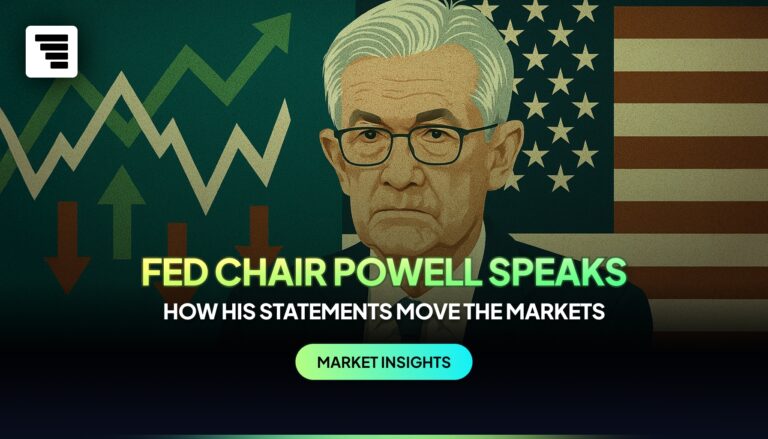
Fed Chair Powell Speaks: How His Statements Move the Markets

Every time Fed Chair Jerome Powell steps up to a microphone, the markets hold their breath. Whether you’re trading forex, indices, or commodities, understanding the impact of Powell’s words is essential for timing entries and managing risk.

Why the Market Listens to Jerome Powell

As Chair of the Federal Reserve, Powell is the most influential voice in U.S. monetary policy. When he speaks, global markets move—sometimes violently.

The Fed controls the levers that influence economic growth, inflation, and employment. Its decisions shape interest rates, money supply, and financial stability. 

And Powell? He’s the spokesperson whose phrasing can send asset prices soaring or crashing.

Economists and traders alike call this style of market-moving language “Fedspeak”, a blend of technical jargon and subtle hints meant to guide expectations without triggering panic.

The Fed’s Toolkit – And Where Powell Fits In

The Fed doesn’t just pull one lever. It uses multiple tools to control inflation, support employment, and maintain financial stability. Powell plays a central role in communicating how and when these tools will be used.

Here’s a breakdown of the main tools, and what their use (or talk of their use) typically signals for traders:

ToolWhat It DoesPowell’s RoleLikely Market Impact
Interest RatesRaising/lowering the Fed Funds Rate to cool or boost growthSignals hikes or cuts via tone or statementsHike = Bearish; Cut = Bullish
Quantitative Easing (QE)Buying bonds to inject liquidity into marketsJustifies QE as needed to support conditionsBullish
Quantitative TighteningSelling bonds to withdraw liquidityWarns of tightening to control inflationBearish
Forward GuidanceOutlines future policy pathSets expectations for months aheadDepends on tone/direction

Powell is often referred to as the “communicator-in-chief”—tasked with balancing transparency with market stability. A poorly chosen phrase can trigger panic. A measured statement can calm fears instantly.

How the Market Reacts to Powell’s Language

Markets don’t just listen to what Powell says—they obsess over how he says it.

A subtle shift in tone, a single new adjective, or the omission of a familiar phrase can flip market sentiment within seconds. Traders look for signs that Powell is either:

  • Hawkish – signaling concern about inflation and favouring tighter monetary policy (usually bearish for stocks, bullish for USD)
  • Dovish – prioritizing growth and employment, supporting looser policy (often bullish for stocks, bearish for USD)

Even in prepared statements, Powell’s phrasing is closely analyzed. Words like “uncertain,” “modest,” or “substantial” can all carry different market implications.

Real Examples of Market Moves After Powell Speaks

Case Study 1: Rate hike signal causes stock selloff

In December 2022, Powell hinted that rates could remain “higher for longer.” Within minutes, the S&P 500 shed nearly 3%. Bond yields spiked. Traders rushed to reprice their rate expectations.

Case Study 2: Dovish surprise lifts gold and risk assets

In July 2023, Powell noted that the Fed was seeing “disinflationary signals.” Gold rallied. Tech stocks surged. The USD weakened against major pairs.

Case Study 3: Mixed tone creates volatility spike

At Jackson Hole 2021, Powell praised recovery progress but warned inflation risks were rising. The result? Whipsaw volatility as markets struggled to price in both optimism and caution.

Phrases Traders Should Look for in Powell’s Speeches

Certain phrases appear regularly in Powell’s language—and each carries weight. Here’s a cheat sheet:

PhraseWhat It SuggestsMarket Reaction
“Higher for longer”Rates likely staying elevated beyond expectationsBearish for risk assets
“Data dependent”No clear path; will respond to economic reportsIncreased volatility
“Appropriate” (tone shift)A shift in how aggressive policy should beDepends on context/tone

Understanding these phrases—and when Powell deviates from them—is key to reading his intentions.

The Q&A is Where the Real Info Comes Out

While Powell’s prepared remarks are carefully crafted, it’s the live Q&A that often moves markets the most. Journalists push for clarity, and Powell’s responses can reveal hesitation, confidence, or a change in stance.

Watch for:

  • Repeated emphasis on certain risks (e.g., “inflation” or “tight labor markets”)
  • Rewording of guidance from past statements
  • Any divergence from recent FOMC minutes or dot plot expectations

How to Prepare for a Powell Speech as a Trader

  • Check the calendar: Know when major events like FOMC meetings, Jackson Hole, or Senate testimony are happening. The FXIFY calendar is your friend here.
  • Reduce exposure: If you’re not comfortable trading high-volatility environments, it’s okay to sit out. No trade is a trade.
  • Set alerts: Have your trading platform notify you when Powell begins speaking, or if certain asset prices hit key levels.
  • Avoid overtrading: The temptation to chase short-term moves can lead to losses. Wait for clarity, don’t guess.

Tip Box: 3 Golden Rules for Trading Powell Speeches

  1. 1. Don’t predict—react.
    Trying to guess Powell’s exact words is a gamble. Wait for the market’s initial reaction and trade the response, not the speech.
  2. 2. Know the rules—and the risks.
    FXIFY allows news trading, but traders should still be mindful of the risks. Volatility can cause wider spreads and undesirable fills. We advise you to manage your risk appropriately during these trading periods.
  3. 3. Watch the Q&A.
    Prepared remarks are just the beginning. The real market movers often come during the Q&A, when Powell answers tough questions and reveals tone shifts.

Final Thoughts – Why Powell Will Keep Moving Markets

Jerome Powell isn’t just another central banker—he’s the voice of the world’s most powerful monetary institution. His statements ripple across Forex, stocks, commodities, crypto, and beyond.

For traders, listening carefully isn’t just smart—it’s necessary. Whether you’re shorting the dollar, fading the S&P, or buying gold, understanding Powell’s language gives you an edge.

Because in this market? One word really can change everything.

How to Trade Trendlines: Guide for Beginners

Trendlines are one of the most widely used tools in technical analysis because they provide a way to understand market direction. By showing whether price is consistently moving higher or lower, they help traders quickly identify the prevailing trend, spot potential turning points, and judge when momentum may be changing. A single well-drawn line can reveal whether buyers or sellers currently dominate the market.

What is a trendline?

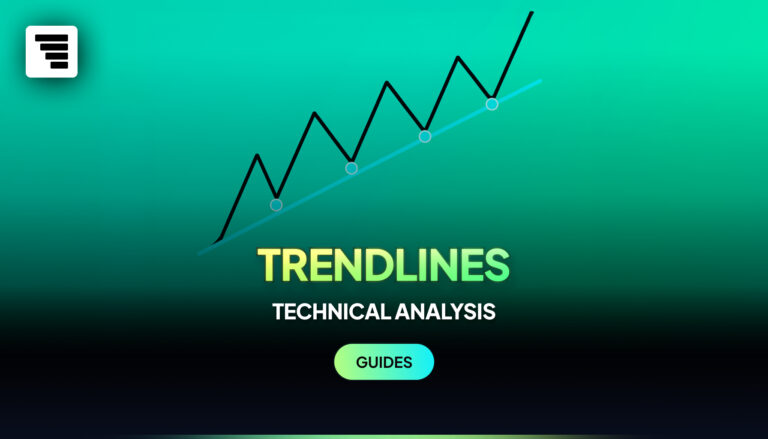
Trend lines are more than just a line on a price chart—it’s a way to simplify the market’s story. By connecting swing highs in a downtrend or swing lows in an uptrend, traders can see the path that price is following. It turns a noisy chart into a clear guide that shows who has control of the market, and where unseen support and resistance levels may lie.

Uptrend line/Support: Connects rising lows, signalling that buyers are steadily pushing prices higher.

Downtrend line/Resistance: Connects falling highs, signalling that sellers are keeping pressure on the market.

The purpose of drawing a trendline isn’t only to mark past price moves—it also helps traders monitor whether momentum is holding or if a potential shift is developing. If price respects the line, momentum remains intact. If it breaks, it may be hinting at a change in direction to watch closely.

Trendline Breakouts

Trendlines aren’t unbreakable. In fact, watching for when they break is often just as important as when they hold.

Momentum & control: A trendline represents which side (buyers or sellers) currently has momentum.

Liquidity sweeps: If a trendline is respected, it means price has already swept liquidity near previous highs or lows along that line.

Confirmation of reversal: A break of both the trendline and nearby swing points often confirms a shift in direction.

⚠️ Before trading this setup, always backtest it. Trendline breaks can look convincing but may turn into false signals without proper confirmation.

What patterns do trendlines occur in?

Markets don’t move in straight lines. Price usually rises and falls in waves, and when you connect these highs and lows with trendlines, they start to form clear chart patterns:

Triangles: Created when two trendlines converge, signalling tightening price action and a potential breakout.

Wedges: Slanted consolidations where price narrows, often hinting at an impending breakout or reversal.

Channels: Parallel trendlines that contain price within an uptrend or downtrend, offering potential buy/sell opportunities at the boundaries.

Trading with Trendlines

Trendlines aren’t a standalone strategy, but they’re a valuable tool when combined with other methods. Traders typically use them for:

Breakout trades: Enter when price breaks above or below a trendline.

Reversal/Reversion Trades: Enter when price rejects from a trendline (in the direction of the rejection).

Confluence: Using trendlines alongside key levels, supply/demand zones, or Fibonacci retracements to strengthen a trade idea.

Indicator confirmation: Some traders pair trendlines with RSI or moving averages to spot momentum shifts.

⚠️ Whatever approach you choose, remember to backtest first. Build confidence in your system before risking capital.

Conclusion

BenefitWhy It Matters
SimplicityA single line can make market direction clearer at a glance.
VersatilityWorks across timeframes and with multiple trading strategies.
ConfirmationAdds confidence when combined with other tools like RSI or Fibonacci.
Risk AwarenessHelps spot potential reversals when trendlines break.

Trendlines are one of the most practical tools in technical analysis. They help traders simplify trends, identify key levels in the market, and use them to form trade ideas.

FAQ

Are trendlines subjective?
Yes. Different traders may draw trendlines slightly differently. The key is consistency in how you apply them.

Do trendlines work on all timeframes?
Yes, but they tend to be more reliable on higher timeframes where price structure is clearer.

Can trendlines be used with indicators?
Definitely. Many traders combine them with RSI, moving averages, or volume to improve accuracy.

Are trendlines reliable on their own?
Not always. They work best when combined with other analysis tools for confirmation.

How many points are needed to draw a valid trendline?
At least two points are required, but three or more touches make the trendline more reliable.